Showing posts with label Food P*rn. Show all posts

Wednesday, May 11, 2011

Eat My Biscuits. Sausage Biscuits *wink*


My sister 'M' is a masterful mastermind in the hearth of her house, the kitchen. Her sweet goodies and salty savories are the kibble for my soul and sanctuary. (And sometimes growing adipose cells! )

Each ingredient in her recipe is a SUPER FOOD by all comparisons.


Coconut flour is awesome stuff. Apparently it has great minerals, medium chain fatty acids and fiber. Fiber is good especially when it is lectin and phytic acid free (unlike legumes, raw nuts/seeds and wholebodydiseasegrains).

Red VPO (virgin palm oil) is one of the most popular oils in the world -- rich in deep orange carotenoids, antioxidant tocotrienols, coenzyme Q10, stigmasterol/plant sterols (anti-rheumatic Wulzen factor) and both oleic acid and palmitic acid (yes you need both -- read Peter Hyperlipid THE HORROR NEVER ENDS).

Onions, low carb, high protein -- these food factors make for great health and snacking. Onions and green onions are rich in sulfur and quercetin (if you don't have SIBO and can tolerate FODMAPs) which aid glutathione proteins to detox and keep toxins at bay.

Excessive carbs glycosylate and sugar-coat organs -- the tomatoes are fantastic long-acting carbs without impacting BGs.

High protein -- sustains growth, repair and regeneration.

Sausage biscuits are one of the easiest to make vehicles for coconut flour and the other super foods. These keep for a while and are simply convenient to snack on and easily transportable (though somewhat crumbly if smashed). Coconut flour absorbs a lot of water from the air -- the eggs from the protein seal the moisture in but you may have to adjust the liquid in the recipe depending on your house humidity and other factors.

These make great paleo bisonburger 'buns' when split apart in half...


Sausage Biscuit Recipe
(modified, courtesy of my sister 'M' YOU ROCK GRRRL!!)


4 eggs
1/4 c. virgin palm oil (or lard or ghee or coconut oil)
1/4 tsp. Utah salt
1/4 tsp. onion powder or grated onion, opt.
1/8 - 1/4 c. minced scallions (or shallots or white onions)
1/2 c. coconut flour, sifted
1/4 tsp. baking soda (Aluminum free)
1/2 c. organic sundried tomatoes
4 to 8 oz. sausage or ground beef/bison sauteed with sundried tomatoes and some tomato or fave spaghetti sauce until semi-dry but mildly moist (I like Mario Batali's sauces)


Blend together eggs, oil, salt and onion. Combine coconut flour with baking soda and whisk into batter until there are no lumps. Fold in minced sundried tomatoes and sausage. Let the batter rest for 4-5 min to thicken. Drop batter by the spoonful onto greased cookie sheet (or use parchment paper), 2 in. apart. Bake at 400 degrees for 15 min.

Makes 8 biscuits.


Related References:

Stephan Guyenet PhD: Palm oil -- one study 69% reduction in oxLDL. Palm oil contains Coenzyme Q10, tocotrienols (family of vitamin E's).
http://wholehealthsource.blogspot.com/2010/07/tropical-plant-fats-palm-oil.html

Expert Researcher Barry Tan PhD on carotenoids and tocotrienols in palm oil, interview and research articles.
http://www.drpasswater.com/nutrition_library/tan_1.html
http://americanrivernutrition.com/research/research-articles

History of Palm Oil and production
http://www.cambridge.org/us/books/kiple/palmoil.htm

More history: Introduction: nutritional aspects of palm oil.
Cottrell RC.
Am J Clin Nutr. 1991 Apr;53(4 Suppl):989S-1009S. Review. (free PDF)

Vitamin E tocotrienols improve insulin sensitivity through activating peroxisome proliferator-activated receptors.
Fang F, Kang Z, Wong C.
Mol Nutr Food Res. 2010 Mar;54(3):345-52.
PMID: 19866471

Comparative effects of dietary corn oil, safflower oil, fish oil and palm oil on metabolism of ethanol and carnitine in the rat. [PO improves carnitine status]
Sachan DS, Yatim AM, Daily JW.
J Am Coll Nutr. 2002 Jun;21(3):233-8.
PMID: 12074250 (free PDF)

Heated palm oil [FIVE-TEN TIMES] causes rise in blood pressure and cardiac changes in heart muscle in experimental rats. [unheated palm oil was associated with wt loss compared with control rats]
Leong XF, Aishah A, Nor Aini U, Das S, Jaarin K.
Arch Med Res. 2008 Aug;39(6):567-72.

The effect of dietary red palm oil on the functional recovery of the ischaemic/reperfused isolated rat heart: the involvement of the PI3-kinase signaling pathway.
Engelbrecht AM, Odendaal L, Du Toit EF, Kupai K, Csont T, Ferdinandy P, van Rooyen J.
Lipids Health Dis. 2009 May 29;8:18.

Cardioprotection with palm oil tocotrienols: comparision of different isomers.
Das S, Lekli I, Das M, Szabo G, Varadi J, Juhasz B, Bak I, Nesaretam K, Tosaki A, Powell SR, Das DK.
Am J Physiol Heart Circ Physiol. 2008 Feb;294(2):H970-8.
PMID: 18083895 (free pdf)

Dietary red palm oil supplementation reduces myocardial infarct size in an isolated perfused rat heart model.
Bester DJ, Kupai K, Csont T, Szucs G, Csonka C, Esterhuyse AJ, Ferdinandy P, Van Rooyen J.
Lipids Health Dis. 2010 Jun 18;9:64.
PMID: 20565865 (free pdf)

Replacement of dietary fat with palm oil: effect on human serum lipids, lipoproteins and apolipoproteins. [11% increase in human subjects of HDL2b, the cardio- and disease-protective HDL fraction with palm oil]
Sundram K, Hornstra G, von Houwelingen AC, Kester AD.
Br J Nutr. 1992 Nov;68(3):677-92.

Effect of dietary palm oil on lipoprotein lipases: lipoprotein levels and tissue lipids in rat. [higher HDL, lower TG compared with control diet arms]
Pereira TA, Sinniah R, Das NP.
Biochem Med Metab Biol. 1990 Dec;44(3):207-17.

Palm and partially hydrogenated soybean oils adversely alter lipoprotein profiles compared with soybean and canola oils in moderately hyperlipidemic subjects. [Palm Oil Increases in HDL, increases in apoA1 and both are disease/longevity-protective -- Table--in only 35 days, with palm oil, increased HDL, apoA1, and lowered TG, Lp(a) compared with canola, soy and hydrogenated soy; I ignored authors' conclusions]
Vega-López S, Ausman LM, Jalbert SM, Erkkilä AT, Lichtenstein AH.
Am J Clin Nutr. 2006 Jul;84(1):54-62. (free PDF)

Palm oil and health: a case of manipulated perception and misuse of science.
McNamara DJ.
J Am Coll Nutr. 2010 Jun;29(3 Suppl):240S-244S.

Saturday, April 23, 2011

Fermented Asian Food and Gut Dysbiosis 101


Flexibility = Adaptability

This gentleman was kind enough to let me take his photo by the West Lake in Huangzhou. His pose lasted longer than the time we had to hang out! I especially loved his timeless smile and ageless grace.


Fermented Foods of China


Quest for Fermented Food

In our first leg of our vacation in China, my husband and I had dinner with fellow blogger and fermentation fan Seth Roberts at his choice, a Yunnan restaurant which specialized in regional dishes. Wasn't difficult to track down dishes with fermented condiments or fermented flavors. Most traditional ethnicities incorporate fermented foods in daily meals from dawn to twilight no matter where you are on planet earth. (everywhere except the land of McDonalds, Velveeta doesn't count!)

From top to bottom:
-- roasted duck with fermented bean paste (I think, I can't recall now!)
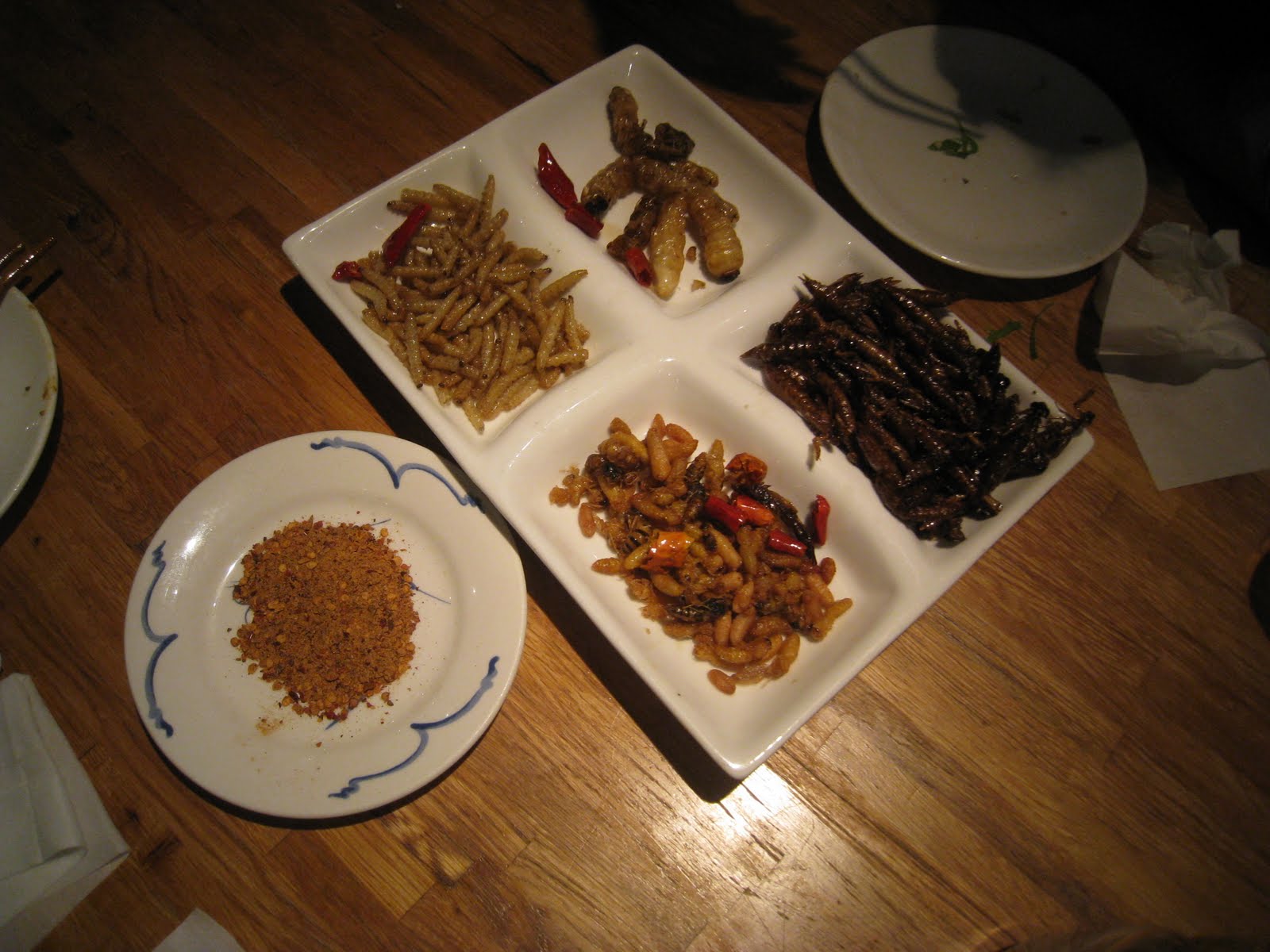
--deep fried insects (grub have microbiota which ferment but *ugggh* the veggie oils)
--fish with fermented black bean sauce
--yak milk yogurt, fermented sweeten rice wine dessert w/tapioca balls, tea with milk (tea leaves fermented)
--(not shown) B-E-E-R, fermented grains (it aint that bad, no?)


YUM!


Exploring the Benefits of Fermentation

Our gut microbiome is primarily responsible for fermenting our undigested food. Under pathologic circumstances, fermentation happens where it is not supposed to, e.g. the stomach, small bowel or in our blood stream.

Below Jiménez describes the benefits and distinct role our gut microbiome plays in our health, longevity and maintenance. Some experts even propose that our gut microbiome fucntions as an neuro-endocrine organ. I would strongly concur. It is transplantable like any other organ and is so indisposable that we cannot live without it. When it goes awry in function, like any other organ, a host of chronic illnesses and disorders ensue -- obesity, autoimmune diseases, cancer, mental conditions/crankiness, infertility, heart disease, etc.


Table IV Primary Functions of Intestinal Microflora (per Jiménez) (free PDF)
I. Planktonic microflora --> METABOLIC

(a) To ferment indigestible substrates (fiber, extruded cells and endogenous mucus)

(b) To favor the growth of beneficial intestinal microflora
----(i) Improves lactose digestion----(ii) Modulates intsetinal gas production
----(iii) Increases genesis of short-chain fatty acids --> intraluminal acidication --> increases intestinal transit
----(iv) Increases the absorption of Ca, Fe, and Mg----(v) Synthesizes vitamins: K, folic acid, biotin, B12

II. Mucosa-associated microbiota (MAM)

(a) Protective
----(i) Barrier effect + bacteriocin synthesis --> prevention of invasion by exogenous pathogens
----(ii) Maintenance of intestinal permeability --> prevents bacterial translocation and systemic infection (e.g. PREVENTION OF POOP IN THE BLOOD STREAM)

(b) Trophic
----(i) Controls epithelial cell proliferation and differentiation of intestinal mucosa
----(ii) Maintains new cell growth in intestinal epithelial crypts
----(iii) Of the intestinal immune system: cells and serum (immunoglobulins)


Sources

Rev Esp Enferm Dig. 2009 Aug;101(8):553-64.
Treatment of irritable bowel syndrome with probiotics. An etiopathogenic approach at last?
Bixquert Jiménez M.
Abstract
Irritable bowel syndrome (IBS) is the most common functional digestive disorder, and may affect 11-20% of the adult population in industrialized countries. In accordance with Rome III criteria (2006) IBS involves abdominal pain and bowel habit disturbance, which are not explained by structural or biochemical abnormalities. Several hypotheses attempt to account for the pathophysiology of IBS, but the etiology still remains uncertain or obscure, perhaps multifactorial. Abnormalities in colonic microflora have recently been suggested in such patients, as has abnormal small-intestine bacterial overgrowth (SIBO), or in particular a significant reduction in the amount of intraluminal Bifidobacteria or Lactobacilli, with consequences like the production of colonic gas, and motility or sensitivity disturbances of the intestinal tract. The disorder is difficult to treat, and the wide spectrum of non-drug and drug treatments shows our ignorance about the cause of the condition. Newer drugs, both pro- and anti-serotonin, have failed to show long-term efficacy or have been withdrawn due to concerns about harmful effects. Recent research has provided increasing support for the idea that disturbances of intestinal microbiota occur in patients with IBS, and that such abnormalities may contribute to IBS symptoms. Studies in Scandinavian countries in the last ten years emphasize the role of probiotics in the modulation of intestinal microbiota, and as a consequence in the regulation of the motility and hypersensitivity of the digestive tract. Although results between studies are difficult to compare because of differences in study design, probiotic dose, strain, and duration of therapy, some studies show symptom improvement. Lactobacilli are found among the normal bacterial flora of the gastrointestinal tract, and Lactobacillus plantarum (Lp) is one of the species frequently isolated from the human mucosa, which is capable of surviving the low pH of the stomach and duodenum, resisting the effect of bile acids in the upper small intestine when ingested, and temporarily colonizing the gastrointestinal tract by binding to the intestinal and colonic mucosa. Concurrent with colonization by Lp there is a decrease in bacterial groups with gas-producing ability, such as Veillonella spp. and Clostridia spp. Evidence has now accumulated to suggest the efficacy of certain probiotics like Lp299v, which may be capable of bringing about a significant reduction in pain, abdominal distension and flatulence, while increasing health-related quality of life in IBS.


Int J Mol Sci. 2009 Aug 27;10(9):3755-75. Free PDFThe improvement of hypertension by probiotics: effects on cholesterol, diabetes, renin, and phytoestrogens.
Lye HS, Kuan CY, Ewe JA, Fung WY, Liong MT.
Abstract
Probiotics are live organisms that are primarily used to improve gastrointestinal disorders such as diarrhea, irritable bowel syndrome, constipation, lactose intolerance, and to inhibit the excessive proliferation of pathogenic intestinal bacteria. However, recent studies have suggested that probiotics could have beneficial effects beyond gastrointestinal health, as they were found to improve certain metabolic disorders such as hypertension. Hypertension is caused by various factors and the predominant causes include an increase in cholesterol levels, incidence of diabetes, inconsistent modulation of renin and imbalanced sexual hormones. This review discusses the antihypertensive roles of probiotics via the improvement and/or treatment of lipid profiles, modulation of insulin resistance and sensitivity, the modulation of renin levels and also the conversion of bioactive phytoestrogens as an alternative replacement of sexual hormones such as estrogen and progesterone.

Friday, December 10, 2010

Food P*rn: Hamburg, Germany

Food P*orn in Hamburg

Staying off the harbor in Hamburg, Germany (with the big Disney cruise within sight from the restaurant) we had one of the best breakfast buffets I've ever had. Steak tartare appeared only once the 4 days we were there but it was F-A-B-U-L-O-U-S. I have to limit eating raw meat in front of my husband too frequently (it grosses him out (and I don't get laid)) ...but risking happiness is sometimes worth other joys in life! Generous lox and cream became a superb morning ritual. A bright chopped beet cream sauce and relish were awesome accompaniments. The coffee and espresso in Europe was like extra strong CRACK, I dunno why. Dig the yogurt (yeah with muesli -- yes it's grain -- kick me off paleo-island?). German yogurt ROCKS and about 8 varieties were available. It appeared full fat to me. No where could I translate 'low fat' at the buffet bar. Look at the deep, carotenoid-rich-pumpkin-orange egg yolks!

On Thanksgiving eve of all places at the hotel restaurant, we had a traditionally roasted German duck which is only available seasonally during the fall/winter. WOW. Succulent, rich and earthy. Duck is one of the birds of I love because it is ALL LOVELY DARK MEAT. Wish I had pictures but the ducky didn't make the cut *haa* (my kids deleted).

P.S.
BTW Very rare did I see anyone IN EUROPE APPEAR OVERWEIGHT, OBESE, OR MORBIDLY OBESE COMPARED TO THE UNITED STATES. Just an empirical, clinical observation.