Showing posts with label Mitochondria. Show all posts

Sunday, November 20, 2016

Clinicians and Coaches: ROCK YOUR MICROBIOME & NUTRIGENOMIC MEDICINE w/ The Results & Outcome Academy Conference in 3 weeks

Check out the updated site: TheGutInstitute.Com has launched!


INVITATION TO COACHES AND PRACTITIONERS


Registration and More Details


Clinicians and Coaches:

ROCK YOUR MICROBIOME and NUTRIGENOMIC MEDICINE 
w/ The Results & Outcome Academy Conference
In 3 weeks!


How to Grow Your Practice by Incorporating Microbiome & Nutrigenomic Medicine

Cost: VIRTUALLY FREE AND WORTH $2497
Date: Dec 10th and 11th, 2016
Location: Double Tree Hotel, Berkeley Marina, California


Registration and More Details


What Clinicians and Coaches Will Get!
  • You will walk away with swag worth over $1000 – so the conference is virtually FREE
  • Knowledge on how to build your business
  • Cutting-edge, personalized gut and nutrigenomic protocols for your clients
  • A deep connection with new lifelong friends and future collaboration partners
  • Part of a growing emerging international community who are at the forefront of functional medicine for methylation and microbiome medicine
This an event like no other. We are bringing together leading practitioners, functional medicine providers, and health coaches to create a collaborative community.
This will be transformational experience - if you plan to come and just sit in the seat and take notes – then this is not for you… You will not leave the same as you came


Registration and More Details


pain-points-w-male-practitioner

what-you-will-learn-bullet

Registration and More Details


This is Dr. Anh, and on behalf of Drs. Grace and Erika, I want to say “THANK YOU!” so much for your interest in our upcoming event, Microbiome and Nutrigenomic Medicine w/ Business Acumen live training!

speakers-no-bio

sponsors-4-em-dfh-s-aob

NEW SITE  TheGutInstitute.Com for the latest in microbiome, gut flora, science, podcasts and more!

Thursday, November 8, 2012

Mitochondria: Fuel, Fluxxx and Heat (NSFW)

Buddha Bar (Sex Lounge)
Credit: Youtube.com


Fuel and Fluxxx...

Why do we store fat? Why do we eat?  A scientist who wrote about reproduction, fuel, photoperiods and fecundity wrote the below abstract...[1]

"While there is a relatively direct connection between
circulating levels of metabolic fuels and the GnRH [gonadotropin releasing hormone] pulse generator [in SCN behind the retina], this might not be the only energy-related pathway influencing the secretion of this neuropeptide. The overall control of energy balance is an immensely complex process and a number of pathways involved in it might secondarily influence the activity of GnRH neurons. Peripheral signals influencing energy balance and thus possibly GnRH secretion could come from the liver, pancreas, stomach, duodenum or adipose tissue, and these signals could be sent to the brain via the vagus nerves or by hormones such as leptin, insulin, insulin-like growth factor 1 or ghrelin. These hormones could act directly on the neural circuits controlling the GnRH neurons or they could act by modulating the availability of metabolic fuel. Likewise, the neuropeptides regulating GnRH secretion in the forebrain could also include galanin, orexin, the urocortins and endogenous opioids. Recent interest has focused on kisspeptin, the product of the KISS1 gene. The presence of kisspeptin is necessary for normal reproductive development and it can override the reproductively detrimental effect of mild food restriction."

Obviously how we expend fuel is highly complex and humans are ruled by a big, big, big, hungry, hot brains... Grow or growl? Feast or fast? F-ck or forage? Repair or repast?


HEAT: Cellular Bioenergetics Creates Wildly Explosive, Exothermic Reaction Generating Water


CALORIES IN  ≠  CALORIES OUT

...we are not neat bomb-calorimeters, but open, conserved, networked metabolic and energy systems...

Photos credit: [2].


The Evolution of Body Heat?

When oxidized, the great majority of our food and stored energy goes to the production of HEAT.      What governs this? It is multifactorial but adrenaline, thyroid, cortisol and mitochondria quality are just a few [2]. Active tissues contain more mitochondria. Heat makes us mammals and birds. We have hot bodies, precisely 37C for the great majority.


In the 'Hot Brain:  Survival, Temperature, and the Human Body' the authors theorized that temperature gave us advantages over eukaryotic infections (yeast, fungal origins -- we are eukaryotic) which plagued bird/reptile species which were not armed with high 37C temperatures or fever-inducing capabilities [3].  It is a very interesting theory. Control of thermoregulation (heat loss v. heat gain) is believed to have evolved in the brain of therapsids. Our sinuses are larger. Mammalian brains have a Circle of Willis where 4 arteries (internal carotids and vertebral arteries) provide a complete internal brain circulation with collaterals, such that despite blockage of one or more of the 4 major arteries circulation in the brain and to the body remains intact.  Unfortunately only 25-33% of us have a 'perfect' classic circle of Willis; others have degrees of narrowing or asymetry in certain areas or another. Photos courtesy: Hot Brain, pp. 44, 142.

Recently a microbiologist, Casadevall, from Albert Einstein had the same theory that the rise of mammals can be attributed to 'endothermy and homeothermy [which] are thought to contribute to mammalian resistance to mycosis by creating a thermal exclusionary zone that inhibits most fungal species. The remarkable resistance of mammals to mycotic diseases is probably a combination of a vertebrate immune system, with both innate and adaptive arms, and elevated body temperatures... The currently favored hypothesis for the demise of dinosaurs and end of the age of reptiles is a bolide impact approximately 65 million year ago with the possibility that other events, such as increased volcanism, contributed to disrupting the cretaceous ecosystem. That ecological calamity was accompanied by massive deforestation, an event followed by a fungal bloom, as the earth became a massive compost. Although one cannot know which spores were present at the time, the likelihood that pathogenic fungi existed at the K-T boundary is enhanced by the finding that the potential for pathogenicity probably arose independently several times in evolution...'[3]

'Although we do not know the timeline for the recovery of the planet climate, it is estimated that photosynthesis was shut down for 6 months and climate cooling persisted for at least 9 years, and the occurrence of a fungal bloom sufficient to have left fossil evidence implies that surviving animals were exposed to massive numbers of fungal spores. The darkened skies and cooler temperatures that accompanied the K-T cataclysm would have shielded the sun and reduced the ability of ectothermic creatures such as reptiles to induce fevers by insolation, a necessary activity for protection against fungal diseases. Hence, it is reasonable to posit that ectothermic creatures unable to induce behavioral fevers and in weakened states from environmental stress would have been at a severe disadvantage relative to small mammals with their innate thermal exclusionary zones for fungal growth. Further complicating the situation for reptiles is that eggs can be vulnerable to fungal attack, whereas mammalian progeny would be protected in placentae.'[3]

I think it has merit. We generate a lot of HEAT and it comprises a cr*pload of our total energy losses (as many in NY know without electricity due to Storm Sandy and no heat to fight night time drops to freezing temperatures). As Casadevall reported  'the mammalian lifestyle is energetically costly.'


Mitochondria: Water (H2O) = 286 kJ of P-O-W-E-R

Many obesity researchers appear to forget these multiple evolutionary and hormetic factors in their Big Pharma funded, tenure-track equations. One did not (though partly Joslin funded which is Big Pharma).


In a Nature article, Tseng et al discuss mechanisms to find a drug target to increase cellular bioenergetics and energy expenditure as an anti-obesity strategy [2]. (But... Drug targets are always silly, no?) They discuss PPAR-delta, AMPK and several other pathways with potential promise.  A succinct explanation of how mitochondria produce energy on demand by harnessing the energy from the formation of water in the cellular bioenergetics of mitochondrial metabolism of fuel is provided. They define bioenergetics as the 'Studies the flow of chemical bond energy within organisms. In a living cell, the principal reactions of fuel metabolism take place in the mitochondria, where food energy is released,oxygen is consumed, and water and carbon dioxide are produced.'

All life on earth utilizes the energy formed from water formation to power pathways and metabolism. Remember the Calvin Cycle/Photosynthesis where carbs (glucose) are formed from air (CO2), and energy of the sun? In the mitochondria, the opposite reaction occurs. Energy from the exothermic reaction of water forming from air (O2) and the enzymatic burning of fuel (oxidizable food, glucogen, glucose, fat) result in HEAT and ATP. When one mole of H2O is created from one H2 (hydrogen) and half O2 (oxygen), 286 kJ of power are released (in other words, 68 kcal, which is about one small potato).... FROM FORMATION OF ONLY ONE MOLE OF WATER.

CO2 1/2 O2  =   one mole H2O (~18 grams water = 3.5 teaspoons)  =  286 kJ


Fuel Efficiency of Our Mitochondrial Cellular Respiration

With cellular respiration, instead of an enormous, exothermic explosion (like a hydrogen bomb), the electrons and protons are added step-wise on a gradient known as the electron transport chain (ECT) in plants and animals.  A biological mitochondrial 'battery' is created with the 'anode' on the inner mitochondrial membrane side and the 'cathode' on the other.  Heat is energy released when oxygen is the final proton acceptor and coupled to the enzyme (F1F0-ATPase) that forms ATP, the universal currency of cellular energy in the body. When the protons fall across the proton channel, ATP is formed.  We use ATP as fuel every minute every day for all cellular work, then recycled back to ADP.  In one day, it is estimated that our mitochondria may produce our own weight in ATP [5].

Efficiency of the theoretical transfer of energy from oxidizable fuel to ATP and heat is pretty darn good: 39% ATP and 61% heat [5]. Mitochondria are energy rockstars. Obviously many biolgical factors determine true efficiency: iron status (cytochromes are composed of heme), ubiquinol, oxidative and inflammatory state, thyroid, HPA axis function, hormones, etc.

Plants (chloroplasts) get 3-6% efficiency from transfer of solar energy to the energy bonds of plant starches and fatty acids. Particular C4 plants can get 7-8% (sugarcane) and one super cyanobacteria strain Chlorobaculum tepidum achieves 10%. Various modern fuel efficiencies are approximately -- for coal (~20-30s%) and solar (20%). Photo credit: [5].


References

1. Climate change and seasonal reproduction in mammals. Bronson FH.Philos Trans R Soc Lond B Biol Sci. 2009 Nov 27;364(1534):3331-40.

2. Cellular bioenergetics as a target for obesity therapy.Tseng YH, Cypess AM, Kahn CR. Nat Rev Drug Discov. 2010 Jun;9(6):465-82. [Free PDF here]

3. The Hot Brain: Survival, Temperature, and the Human BodyCarl V Gisolfi, Francisco Mora Teruel. MIT Press (Bradford Book), 2000. [Free SCRIBD text here]

4. Fungi and the rise of mammals.Casadevall A. PLoS Pathog. 2012 Aug;8(8):e1002808.  [PDF]

5. http://highered.mcgraw-hill.com/sites/dl/free/0073525502/930160/mad25502_ch08.pdf

Monday, November 5, 2012

Phat Fat Mitochondrial Energetics: Mobilization v. Accumulation


Adipose is Alive

In ancestral times, adipose stores may have determined longevity and survival past harsh cold winters. My ancestors moved from northern China 8-10+ generations ago to the mountainous areas of Taiwan (according to my dad several hundred years ago). I suppose those who didn't live past the impoverished seasons where food resources were scarce would not have made it, nor would their genes. I can thank them for my persistent fat stores *haa*. Adipose tissue is an endocrine gland which is know to secrete hormones such as leptin and adiponectin to control hunger, body energy balance and energy expenditure. These hormones are involved directly with mitochondrial biogenesis as well, in other words the production and destruction of the mini powerhouses found in all cells (except perhaps glycolytic-dependent cancer cells, which I think are all of them).

Whole body energy balance are determined by many factors, including most importantly:
1) demand
2) diet
3) d*ng hormones (or lack of)


All Organs Sync For Survival

Our brain coordinates many of the hormones that either mobilize or store adipose, e.g. fat. The brain includes the hypothalamus, pituitary, pineal, forebrain, hindbrain, midbrain and our senses for perception (ears, eyes, nose, taste, temperature, barometric pressure, etc). For example, insulin is triggered cephalically (via the brain): by tasting sweetness whether artificial or real, by smelling food, seeing food or even imagining food. Hearing? Hearing the neighborhood ice cream truck as a kid?


Humans Killed for Fat

Fat may have been the biggest boon for man during evolution (see prior animal pharm: humans as marine-based carnivores). Fat contained omega-3s concentrated up the food chain from green chlorophyll sources (grass, algae, etc) and into the muscle fat, organ meats, brains and fat stores of animals and seafood. The encephalization of ancient man is believed to be highly associated with the intake of dietary omega-3s. Perhaps the current de-encephalization over the last 100 yrs is related to the relative deficiency of dietary omega-3s? Or growing overabundance of omega-6s? THANK YOU VERY MUCH corn-fed cows and Keys.


Fat Yields the Most Energy in Human/Mammalian Energy Systems

Hormones for MOBILIZING fat stores far out number the hormones that ACCUMULATE fat. See diagram, modified from Gary Taubes GCBC from a 1965 table of hormonal regulation. Forgive me I use the term 'hormone' loosely because food is hormonal. Fatty acids bind PPAR receptors. We have ~ 3-4 routes to produce energy (some cells utilize glutamine, but I don't know which... neurons only?). Burning fatty acids yields the highest net energy unit (ATP). Why I've wondered? So many hormones promote the escape of fatty acids from temporary storage -- intramuscular, liver, visceral fat, brown fat and subcutaneous fat. Why do we readily release fatty acid energy? Sex, power, survival/suicide? Heat for 37C?

Taubes quoted Hans Krebs who received the Nobel in Medicine in 1953 'All three major constituents of food supply carbon atoms.. for combustion." GNG= gluconeogenesis (glucose/glycogen from any source -- protein, fat, carbs); ATP lesson (click HERE and UCD Lecture and med biochem):


Low Yield but Mandatory Without Oxygen
--anaerobic glycolytic (glucose/GNG) [Yield: 2 ATP]


High Yield in the Presence of Oxygen
--aerobic glycolytic (glucose/GNG) [Yield: 38 ATP] 
--aerobic beta-oxidation of fatty acids like palmitate [Yield: 129 ATP]
--aerobic beta-oxidation of fatty acids like stearate [Yield: 146 ATP]
--aerobic beta-oxidation of fatty acids like ketones [Yield: 51 ATP]
--aerobic oxidation of alcohol [Yield: 16 ATP]


Carbon lengths:
Glucose: 6-carbon carb
Palmitate: 16-carbon saturated fatty acid
Stearate: 18-carbon saturated fatty acid
Ketones (b-oh-butyrate, Ac-Acetate): 4 carbon fatty acid
Alcohol: 2-carbon 'the fourth food group' *haa* tequila is paleo, no?

Prior animal pharm: Palmitate Utilized Between Meals


Mitochondrial Medicine

Where does all this high energy production occur? Of course. Your mitochondria (the lower-net-energy anaerobic pathway is independent of mitochondria, occurs in the cytoplasma).

So. Don't scr*w up your mitochondria. That's like jacking your ride. Blowing out your carburetor.

...FLUNKING your human SMOG TEST.

Mitochondrial medicine is a new field but old premises still apply. The paleo evolutionary paradigm for which your mitochondria and DNA were perfected and honed over 2.5M years of natural and sexual selection are what we believe optimize health and maximize vitality.

Sunday, March 25, 2012

Pesticides in Shanghai and Globally


Titanium (Cover of Sia, David Guetta)
Collin McLoughlin


Pesticides -- Shanghai Problem

Pesticides, herbicides and fungicides are big problems here in Shanghai. Apparently we live in the city with the highest reported field application of pesticides (kilograms per hectare) out of the whole country. According to the report by Zhang et al 'Global pesticide consumption and pollution: with China as a focus' Shanghai applies 12.72 kilograms per hectare of pesticides, which was the heaviest utilization of 32 cities and provinces studied. The lowest utilization rates were in the least industrialized provinces, Inner Mongolia and Tibet (0.15, 0.01 kg/ha respectively).

Prior animal pharm: Pesticides May Cause U.S.A. Insulin Resistance and Obesity Trends


Pesticides are (Obviously) Toxic and Kill

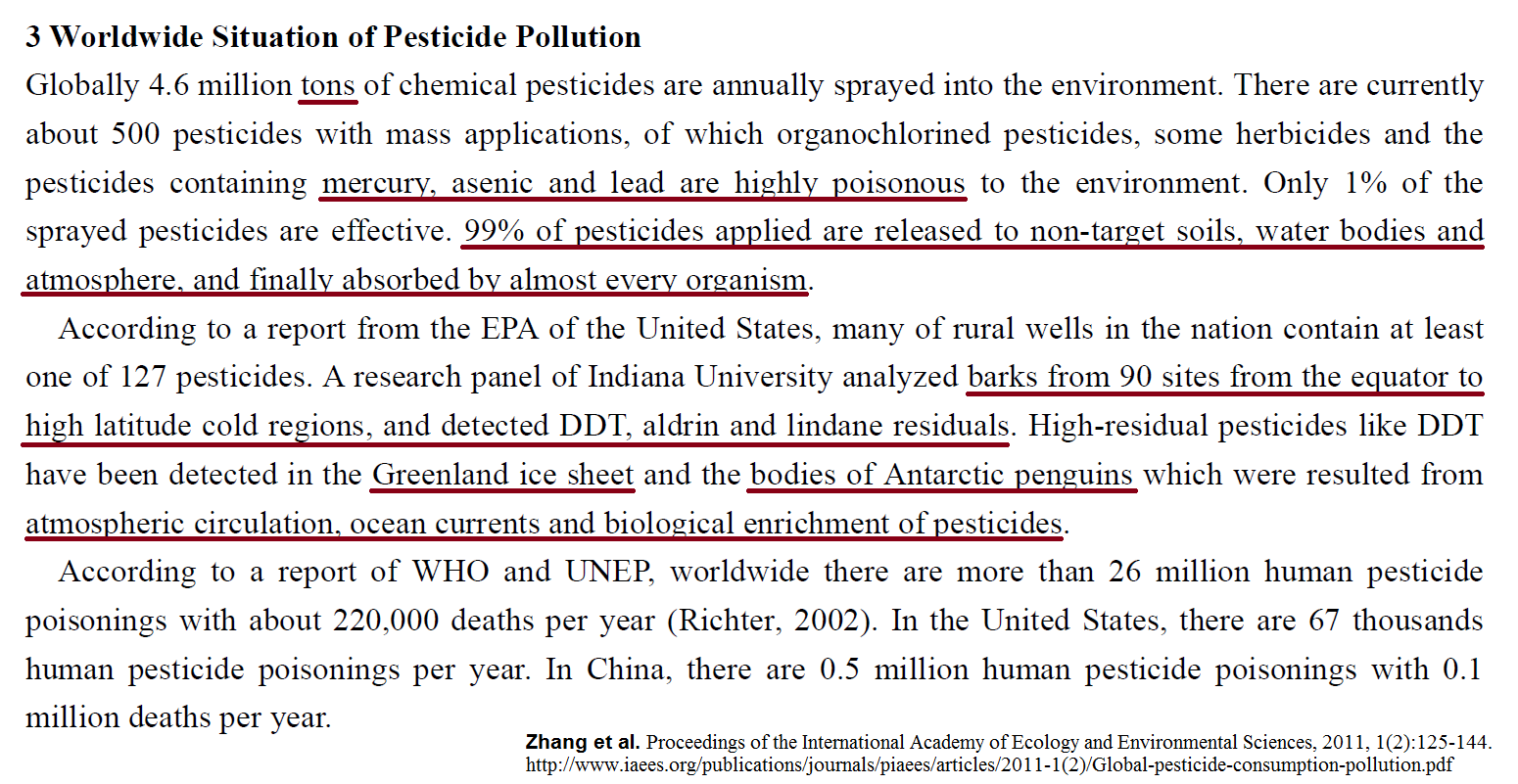
Pesticides, herbicides and fungicides may not be lethal to large mammalian hosts like humans but the mechanisms in which they wreak chemical havoc to pests, weeds/grasses and fungus/molds can affect us either directly or our gut ecosystem which contains 100 trillion mitochondrial-like creatures (bacteria, mycobacteria, protozoa) and fungi. ~~Half of the deaths that occur worldwide secondary to pesticide exposures are here in China. 'According to a report of WHO and UNEP, worldwide there are more than 26 million human pesticide poisonings with about 220,000 deaths per year (Richter, 2002). In the United States, there are 67 thousands human pesticide poisonings per year. In China, there are 0.5 million human pesticide poisonings with 0.1 million deaths per year. (Zhang et al 2011)'

The mechanisms of toxicity of pesticides, herbicides and fungicides usually target a specific neurochemical or metabolic mechanisms that translate toxicity to the cellular, organ and organismal levels:
--sodium channel disturbances (yes our sodium channels are vital; see prior nephropal Evolutionary Brain)
--glyphosate toxicity (see Dr. Tourgeman's nephropal post: Can Glyphosate Herbicide Formulations Damage Humans?)
--mitochondrial toxicity -- electron transport
--mitochondrial toxicity -- fatty acid metabolism
--mitochondrial toxicity -- respiratory complex
--trace heavy metals -- mercury, asenic, cadmium and lead --which severely depress metabolic enzymes (mitochondrial, thyroid, adrenal, neural, gut i.e. DPP IV, pancreatic/digestive, etc)


Pesticides: Global Problem

Although the knowledge and understanding are incomplete, the data and information on how pesticides, herbicides and fungicides are transported, degraded and distributed into the ecosystem are pretty damning. The toxicity effects may not immediately disable and maim but may be chronically sublethal and epigenetic. Since all life on earth is interconnected, the network of disturbances can be subtle. Damaging effects perhaps act in concert either additively or synergistically with other stressors, gut dysbiotic factors and amplified by our trigger-happy immune systems. Zhang et al say that 99% of pesticides, herbicides and fungicides do not even hit the intended target. 99% of pesticide applications are distributed into the environment and ecosystem by spray drift and surface water runoff. The investigators Zhang et al state 'High-residual pesticides like DDT have been detected in the Greenland ice sheet and the bodies of Antarctic penguins which were resulted from atmospheric circulation, ocean currents and biological enrichment of pesticides.' The early players of the damage and adverse effects are the bees, insectal larvae and algae on land and in related water masses. In the next tier of ecological effects, their predators (insects, fish, sealife) are affected either indirectly by reduction of food availibility or direct biochemical, metabolic, immune, endocrine, sexual and reproductive disruptions.

And... Up and up the PREDATOR ECOSYSTEM CHAIN.

[I doubt humans can claim being apex predators, but perhaps apex pests and homo purgare]


Fish: One of the Most Pesticide-Ridden and Toxic Foods

My family and stopped eliminated 80-90% of our fish and seafood consumption (both farmed and wild) when I was first pregnant 12 years ago. I figured what wasn't safe for my baby and I just was not safe, PERIOD. We try to eat ancestrally but seafood just is not part of the equation at this time. Many cultures who subsist on fish and their marine predators (seal, whale) are documented to have elevated levels of persistent organic pollutants (POPs, pesticides, PCBs, solvents, etc) and heavy metals: Great Lake Anishinaabe, Arctic and Greenland Inuit, natives of the Alaskan Aleutian Islands, Amazon Brazilians, Peruvians, and Faroe Islands inhabitants. Where is the source? Pesticides and industrial pollution are bioaccumulated in algae, daphnia, marine life and large predacious fish and marine mammals. Human variance shows that not everyone is severely affected by heavy metals (mercury) and pesticides but certainly some are more sensitive than others or bioaccumulate at extremely higher rates than other individuals. The carriers of apo E4 allele, the ancestral 'efficiency' allele, appear to exhibit higher harboring and decreased detoxification of trace heavy metals (iron, copper, lead, mercury). This may explain the link between increased incidence of central obesity, metabolic syndrome, T2DM, Alzheimer's and dementia and those of ethnic descent where the apo E4 allele is more dominant (Inuit, Amerindians, aborigine subpopulations, northern Chinese, northern European, Africa).


The Jungle: Food Safety in China

Living in China has many 'challenges' (I could list but that would be a brick of novella) but I would have to say food safety TOPS my MANY MANY MANY lists. On one hand Shanghai is one of the most progressive cities of the world I have been fortunate to visit (Paris, Hamburg, NYC, Chicago, SF, Tokyo, Kyoto, Taipei) yet in the context of food safety and standards of quality, I think it is one of the cities with the least quality control and national oversight. For every daily food safety scandal that hit the media, I always wonder how many dozens didn't hit the media under China's scrupulous censorship. We live here in the times that pre-date Upton Sinclair's 'The Jungle' (free PDF HERE, courtesy of Penn State).

Super wonderful people here in Shanghai have been graciously generous in sharing their food suppliers ('The Avocado Lady'), chains of safe food purveyors and organic grassfed meat and egg sources, CSAs (see picture BIOFarm) and safe homemade goodies. Part of the adventure of expat living has been meeting other like-minded freaks in a foreign country.


References

Global pesticide consumption and pollution: with China as a focus. Zhang et al. Proceedings of the International Academy of Ecology and Environmental Sciences, 2011, 1(2):125-144.

Greenpeace 2009 News. Pesticides: Not Your Problem?
http://www.greenpeace.org/eastasia/news/China-pesticides/

Medscape, Maternal Fish Consumption, Mercury Levels, and Risk of Preterm Delivery: Discussion
http://www.medscape.com/viewarticle/553133_4

Is "USDA Organic" a seal of deceit? The pitfalls of USDA certified organics produced in the United States, China and beyond
.

Mercury Toxicity and Treatment: A Review of the Literature. Robin A. Bernhoft. J Environ Public Health. 2012; 2012: 460508.

Sources of Mercury Exposure for U.S. Seafood Consumers: Implications for Policy. Noelle E. Selin, Elsie M. Sunderland, Christopher D. Knightes, Robert P. Mason. Environ Health Perspect. 2010 January; 118(1): 137–143.

The influence of nutrition on methyl mercury intoxication.L Chapman, H M Chan. Environ Health Perspect. 2000 March; 108(Suppl 1): 29–56.

Neurobehavioral effects of developmental methylmercury exposure.[low chronic levels cause neurologic effects] S G Gilbert, K S Grant-Webster. Environ Health Perspect. 1995 September; 103(Suppl 6): 135–142.

New Evidence on Variations of Human Body Burden of Methylmercury from Fish Consumption.René Canuel, Sylvie Boucher de Grosbois, Laura Atikessé, Marc Lucotte, Paul Arp, Charles Ritchie, Donna Mergler, Hing Man Chan, Marc Amyot, Robin Anderson. Environ Health Perspect. 2006 February; 114(2): 302–306.

Impacts of traditional food consumption advisories: Compliance, changes in diet and loss of confidence in traditional foods. Claire McAuley, Loren D Knopper. Environ Health. 2011; 10: 55.

The Changing Landscape of Arctic Traditional Food. Tim Lougheed. Environ Health Perspect. 2010 September; 118(9): A386–A393.

Apolipoprotein E (APOE) allele distribution in the world. Is APOE*4 a 'thrifty' allele? Corbo RM, Scacchi R. Ann Hum Genet. 1999 Jul;63(Pt 4):301-10.

Apolipoprotein E and atherosclerosis in Greenland Inuit. Boudreau DA, Scheer WD, Malcom GT, Mulvad G, Pedersen HS, Jul E.Atherosclerosis. 1999 Jul;145(1):207-19.

Synergy between the C2 allele of transferrin and the C282Y allele of the haemochromatosis gene (HFE) as risk factors for developing Alzheimer's disease. [the effects areextremely exacerbated in apoE4 carriers] Robson KJ, Lehmann DJ, Wimhurst VL, Livesey KJ, Combrinck M, Merryweather-Clarke AT, Warden DR, Smith AD.J Med Genet. 2004 Apr;41(4):261-5.

Alzheimer disease: mercury as pathogenetic factor and apolipoprotein E as a moderator. Mutter J, Naumann J, Sadaghiani C, Schneider R, Walach H.Neuro Endocrinol Lett. 2004 Oct;25(5):331-9.

An observational study on the influence of the APOE-epsilon4 allele on the correlation between 'free' copper toxicosis and EEG activity in Alzheimer disease.Zappasodi F, Salustri C, Babiloni C, Cassetta E, Del Percio C, Ercolani M, Rossini PM, Squitti R.Brain Res. 2008 Jun 18;1215:183-9.

Bioaccumulation syndrome: identifying factors that make some stream food webs prone to elevated mercury bioaccumulation. Darren M. Ward, Keith H. Nislow, Carol L. Folt. Ann N Y Acad Sci. 2010 May; 1195: 62–83.

Fish Consumption and Advisory Awareness in the Great Lakes Basin. Pamela Imm, Lynda Knobeloch, Henry A. Anderson, the Great Lakes Sport Fish Consortium. Environ Health Perspect. 2005 October; 113(10): 1325–1329.

Evaluation of Mercury Exposure Reduction through a Fish Consumption Advisory Program for Anishinaabe Tribal Members in Northern Wisconsin, Michigan, and Minnesota. J. A. Foran, A. D. DeWeese, M. J. Hudson, N. E. Kmiecik. J Environ Public Health. 2010; 2010: 802584.

Adult Women’s Blood Mercury Concentrations Vary Regionally in the United States: Association with Patterns of Fish Consumption (NHANES 1999–2004). [higher mercury in the more affluent, more Asian, more coastal, more fisheating] Kathryn R. Mahaffey, Robert P. Clickner, Rebecca A. Jeffries. Environ Health Perspect. 2009 January; 117(1): 47–53.

Elevated Mercury Concentrations in Humans of Madre de Dios, Peru. Katy Ashe. PLoS One. 2012; 7(3): e33305.

Research into Mercury Exposure and Health Education in Subsistence Fish-Eating Communities of the Amazon Basin: Potential Effects on Public Health Policy.José G. Dórea. Int J Environ Res Public Health. 2010 September; 7(9): 3467–3477.

A preliminary study of mercury exposure and blood pressure in the Brazilian Amazon. Myriam Fillion, Donna Mergler, Carlos José Sousa Passos, Fabrice Larribe, Mélanie Lemire, Jean Rémy Davée Guimarães.Environ Health. 2006; 5: 29.

Hydroxylated PCB metabolites and PCBs in serum from pregnant Faroese women.Britta Fängström, Maria Athanasiadou, Philippe Grandjean, Pál Weihe, Ake BergmanEnviron Health Perspect. 2002 September; 110(9): 895–899.

Levels of Polychlorinated Biphenyls (PCBs) and Three Organochlorine Pesticides in Fish from the Aleutian Islands of Alaska.Sara Hardell, Hanna Tilander, Gretchen Welfinger-Smith, Joanna Burger, David O. Carpenter. PLoS One. 2010; 5(8): e12396.

Re-evaluation of blood mercury, lead and cadmium concentrations in the Inuit population of Nunavik (Québec): a cross-sectional study. Julie Fontaine, Éric Dewailly, Jean-Louis Benedetti, Daria Pereg, Pierre Ayotte, Serge Déry. Environ Health. 2008; 7: 25.

Assessment of dietary exposure to trace metals in Baffin Inuit food.H M Chan, C Kim, K Khoday, O Receveur, H V Kuhnlein. Environ Health Perspect. 1995 Jul-Aug; 103(7-8): 740–746.

Determinants of polychlorinated biphenyls and methylmercury exposure in inuit women of childbearing age.G Muckle, P Ayotte, Dewailly E, S W Jacobson, J L Jacobson. Environ Health Perspect. 2001 September; 109(9): 957–963.

Tuesday, March 20, 2012

Pesticides May Cause U.S.A. Insulin Resistance and Obesity Trends


Emancipator
'Greenland'


Modern Big Tobacco-Agra/Monsatan Crops

Crops are generally coated with pesticides for the last 30-50 years. Are they toxic? Pesticides are upregulated into the food chain via consumption (corn, soy) by feedlot livestock and poultry. Let's not forget tobacco (cigarettes, snuff, cigars, etc). 'Tobacco is a pesticide-intensive crop. With nearly 27 million pounds of pesticides (including insecticides, herbicides, fungicides, and suckercides) applied to the U.S.-grown crop from 1994 to 1998, it ranks SIXTH in terms of the amount of pesticides applied per acre. The tobacco industry regards pesticides as essential to tobacco production, stating that “the crop could not be produced economically without them”.'

Additionally pesticides are employed in municipalities (public schools, parks, government land) and personal home use (termites, ant control, weeds control, lawns, etc). Although pesticides do not taste, smell or look toxic, they are not benign and without metabolic dysregulation consequences.

New studies in PubMed are cropping (pun intended) up in number pointing directly to insulin resistance, obesogenic, neurologic and inflammatory damage secondary to this broad group of pervasive chemicals known as persistent organic pollutants (POPs). They are difficult to avoid as once in the soil, air or bodies of water, fish, birds and animals, they typically fail to degrade and significantly impact the environment.

The researcher Alavanja states 'Over 1 billion pounds of pesticides are used in the United State (US) each year and approximately 5.6 billion pounds are used worldwide (1). In many developing countries programs to control exposures are limited or non-existent. As a consequence; it has been estimated that as many as 25 million agricultural workers worldwide experience unintentional pesticide poisonings each year (4). In a large prospective study of pesticide users in the United States, the Agricultural Health Study, it was estimated that 16% of the cohort had at least one pesticide poisoning or an unusually high pesticide exposure episode in their lifetime (5).

Although attempts to reduce pesticide use through organic agricultural practices and the use of other technologies to control pests continue, exposure to pesticides occupationally, through home and garden use, through termite control or indirectly through spray drifts and through residues in household dust, and in food and water are common (6). The US Department of Agriculture has estimated that 50 million people in the United States obtain their drinking water from groundwater that is potentially contaminated by pesticides and other agricultural chemicals (7, 8). Children from 3-6 years old received most of their dermal and non-dietary oral doses from playing with toys and while playing on carpets which contributed the largest portion of their exposure (9-12).'


U.S.A. Obesity Trends With Pesticide Use

Guess what?

Pesticide use on crops grown in the South (tobacco) and Mid-West (corn, wheat, soy) trends well with U.S.A. obesity patterns [hat tip: LePine MD]. Above is the trend of obesity that starts mid-1980s then grows exponentially each few years. Maps are from Lim et al and BFRSS data.

Smart people in Korea (Lim et al) report that 'There is an apparent overlap between areas in the USA where the herbicide, atrazine (ATZ), is heavily used and obesity-prevalence maps of people with a BMI over 30. Given that herbicides act on photosystem II of the thylakoid membrane of chloroplasts, which have a functional structure similar to mitochondria, we investigated whether chronic exposure to low concentrations of ATZ might cause obesity or insulin resistance by damaging mitochondrial function.'


Pesticides Kill Pests, Including Our Bug-like Mitochondria

It's therefore not surprising to read about the toxic effects of pesticides on pests whose networked pathways overlap almost precisely with our own cells. Atrazine is a mitochondrial toxin, and our mitochondria are the sole energy generators and powerhouses whether the substrate is glycogen, glucose or fatty acids.


Mitochondrial Dysfunction Causes Fatness and Insulin Resistance (IR)

'A close association between mitochondrial dysfunction and insulin resistance is well established [1]–[3]. In in vitro studies, we found that artificial induction of mitochondrial dysfunction induced insulin resistance [4], [5].' This is discussed by Lim et al. He and his colleagues performed an experiment on rodents. They fed low levels of atrazine to rats then examined lab parameters for insulin resistance (IR). What happened? The higher the dose of atrazine, the higher the obesity and insulin resistance. Atrazine was associated with mitochondrial dysfunction, higher visceral (organ) fat deposition, higher blood glucoses and decreased energy metabolism.

Another group of researchers, Ruzzin et al, tested a similar hypothesis. They fed crude Atlantic salmon oil to rodents and examined IR parameters. They state 'POPs accumulate in the lipid fraction of fish, and fish consumption represents a source of POP exposure to humans (Dougherty et al. 2000; Hites et al. 2004; Schafer and Kegley 2002). Therefore, certain European countries have dietary recommendations to limit the consumption of fatty fish per week (Scientific Advisory Committee on Nutrition 2004).' They discovered similar insulin resistant results when they exposed fat cells in vitro to a POP mixture that mimicked the relative abundance of contaminants found in crude salmon oil. Insulin signalling was broken and impaired.


References

BRFSS, Behavioral Risk Factor Surveillance System www.cdc.gov/brfss

http://www.youtube.com/watch?v=iCNW-NgYZ2s [Obesity trend map and cdc slides]

http://www.cdc.gov/nccdphp/dnpa/obesity/trend/maps/obesity_trends_2006.pdf [BRFSS raw data by state and year]

Pesticides Use and Exposure Extensive Worldwide. Michael C.R. AlavanjaRev Environ Health. 2009 Oct–Dec; 24(4): 303–309.

The Tobacco Industry and Pesticide Regulations: Case Studies from Tobacco Industry Archives. Patricia A. McDaniel, Gina Solomon, Ruth E. Malone. Environ Health Perspect. 2005 December; 113(12): 1659–1665.

Chronic Exposure to the Herbicide, Atrazine, Causes Mitochondrial Dysfunction and Insulin Resistance. Soo Lim, Sun Young Ahn, In Chan Song, Myung Hee Chung, Hak Chul Jang, Kyong Soo Park, Ki-Up Lee, Youngmi Kim Pak, Hong Kyu LeePLoS ONE. 2009; 4(4): e5186.

Persistent Organic Pollutant Exposure Leads to Insulin Resistance Syndrome. Jérôme Ruzzin, Rasmus Petersen, Emmanuelle Meugnier, Lise Madsen, Erik-Jan Lock, Haldis Lillefosse, Tao Ma, Sandra Pesenti, Si Brask Sonne, Troels Torben Marstrand, Marian Kjellevold Malde, Zhen-Yu Du, Carine Chavey, Lluis Fajas, Anne-Katrine Lundebye, Christian Lehn Brand, Hubert Vidal, Karsten Kristiansen, Livar FrøylandEnviron Health Perspect. 2010 April; 118(4): 465–471.

Effect of Endocrine Disruptor Pesticides: A ReviewWissem Mnif, Aziza Ibn Hadj Hassine, Aicha Bouaziz, Aghleb Bartegi, Olivier Thomas, Benoit RoigInt J Environ Res Public Health. 2011 June; 8(6): 2265–2303.

Saturday, March 12, 2011

Outs*de of the Main... R-evolutionary docs, Integrative Medicine, Mitochondrial Medicine/Chi

'Western medicine is in crisis. Continually increasing resources are being expended to combat the age-related diseases that include diabetes and metabolic syndrome, Alzheimer's disease, Parkinson's disease, cardiovascular disease, and cancer. Yet the causes of these diseases remain a mystery, while their incidence and morbidity either remain constant or are increasing.'

Douglas C. Wallace, PhD
Center for Molecular and Mitochondrial Medicine and Genetics, Departments of Ecology and Evolutionary Biology, Biological Chemistry, and Pediatrics
University of California, Irvine, California
'Mitochondria as Chi'


Eric Turner and Tinie Tempah
'Written in the Stars'
Courtesy Youtube.com


Evolutionary Medicine

Dr. Tourgeman, Mr. Billy E (from Nephro-paleo) and many others subscribe to an evolutionary (revolutionary) approach for the delivery and science of medicine and reversal of neoLETHAL diseases. The failures of pharmaceutical treatments (ACCORD--diabetes treatment, STATINS S*CK AND DEBILITATE MITOCHONDRIA, etc), out of control incidence of dia-besity and exponential increases in autism, autoimmune disorders and cancer never cease to astound. Modern medicine illustrates too well where we are going wrong with a false foundation of non-functional exercise prescriptions (lack of intensity and weight bearing), high carb grain-based diets and ignorance for ancestrally cemented diurnal/circadian hormesis patterns.


Busy With Blog- and BOOKLUST *ha aaaaahh!*

I've been reading, reading, reading and absorbing... Yeah... it's awful... multitasking my reading b/c I cannot choose and they are all awfully EXCELLENT. Evolutionary medicine, horticulture/PHARMING, hormones and integrative medicine have the been the topics of keen interest the last few months.

  • Hofmekler--The Anti-Estrogenic Diet (of warrior diet fame)
  • Gedgaudas--Primal Body, Primal Mind (evolutionary integrative practitioner who understands our primordial past and neolithic strategies/testing to reverse neoLETHAL damage to the gut, mind and metabolism; 'paleo' is not enough)
  • Young--The pH Miracle
  • Hotze--Hormones, Health and Happiness (former ER doc and allergist turned anti-grain integrative physician)
  • Turner--The Hormone Diet (fixed her thyroid, hot ND hormone s*xxxxpert)
  • Somers--S*xxxy Forever (she's FINALLY addressing gluten and focusing on environmental toxins with consults from Crinnion and Blaylock; online resources: HERE incl integrative paleo Dr. LePine MD)
  • Kimball--The Dirty Life: On FARMING, Food and LOVE (NPR interview)
  • Peter Ballerstedt--Grass-based Health Blog (my fave post: LARD)
  • Rosensweet--Menopause and Natural Hormones
  • Stephenson--Awakening Athena (interview)
  • Werner--Why You Are Fat (gluten-free, hawwwt, hormone queen, trainer who fixed her low progesterone)
  • Taubes--Why We Get Fat (sublime, drool-inducing physicist)
  • Lepine--revolutionary integrative Dartmouth-trained physician and educator
  • Teta brothers--The ME Diet (Metabolic Edge) -- paleo ND physicians and trainers
  • Kurzweil--Transcend (paleo high-tech)
  • Fossel et al--The Immortality Edge (paleo, HIIT telomere science)
  • Sara Godfried--organic gynecologist blog (giggle-worthy, ginormously gifted Harvard-trained integrative physician)
  • Rich Stagliano MD--Blog, former ER doc now blog-astic integrative MD
  • [Pending, Energy and Life: The Promise of Evolutionary Medicine and the Vital Role of Mitochondria by Douglas C. Wallace, Robert Cooke]


Integrative Medicine

Lately I've had the pleasure and oportunity to meet many other integrative practitioners. For one, last year I have had more time after going part-time working 2/days per week at a new position at an integrative medicine/BHRT compounding pharmacy. With chances to talk to integrative practitioners and patients who are ahead of the curve happening all day long, knowledge gaps are being filled in. Sometimes tales do morph to reality. Integrative medicine is where the rubber meets the road -- an interface between high and low tech; between science and folklore. We know paleo works but does it meet modern metrics? Yes naturally of course. You knew that. Is an evolutionary diet and lifestyle enough? Why not, if not?


Wallace: Evolutionary Medicine

Below are a couple of abstracts from Wallace a scientist with a bend toward evolutionary medicine and special emphasis on mitochondrial medicine. Many of us including Tourgeman and I are enormous fans of mitochondria (read the seminal Nick Lane's Power, S*x, Suicide), our endocytosed bacteria what we host and cater to. Both plants and animals have mitochondria, yet only the ascent of man may be attributed to mitochondria and the efficient mitochondrial fatty oxidation of our adipose and ketones. The returns for optimal mitochondrial health are huge -- disease free longevity, happiness and efficient energy production to name just a few. The complexity of mitochondria involve physics, energy, systems biology, maternal genetics, epigenomes, membrane potentials, control of pollution (ROS), bioelectricity, ATP and the explosive, exothermic energy extraction of H2O synthesis.


Chi = Energy = Mitochondria

Wallace describes chi (ancient Chinese philosphy of energy and its flow) as mitochondria. For a Western conventionally-trained scientist, I find that to be mind-numbing and immense.


(Energetics, epigenetics, mitochondrial genetics. Wallace DC, Fan W. Mitochondrion. 2010 Jan;10(1):12-31.)


Our Uniqueness, Based on Bad*ss Factors like Mitochondrial Haplotypes and Migration

If we are all from Africa, then what separates us genetically? Why do some fail on 'paleo' or 'panu' or 'OD' or 'plant avoidance' or ketosis' or 'zone' or whatever? First of all, the dynamics of hormones, toxicity, and extent of neoLETHAL damage on endocrine/GI/brains cannot be overemphasized. Outside of these obvious factors, I conjecture the remainder of genetic variations that were selected for thriving and reproduction depended on our ancestors' local microenvironmental niches, climate changes and resultant food supply.


Omni-wh*res and Recent (3 - 16 kya) Evolution

Unlike guinea pigs or lions, humans are OMNI-WH*RES... *ha* We eat anything and everything edible... EVEN HYDROGENATED TWINKIES.

In Asians, once rice fermentation and alcoholic beverages evolved, so did the gene to process alcohol without toxicity (alcohol dehydrogenase, ADH1B). NY Times: Adventures in Very Recent Evolution.


Mitochondrial mtDNA Variants

Mitochondrial, Y Haplotypes and other DNA variants may indeed describe our bioenergetic differences on the most basic level. Mitochondria utilize for energy production and regulation of genes/growth/reproduction many co-factors: B-vitamins, coenzyme Q10, carnitine, lipoic acid, thyroid hormone (selenium, iodine, tyrosine), etc... Some inviduals have higher B vitamin and methylation requirements whereas others are fine with virtually none? Vitamin C requirements I hypothesize might actually vary by equatorial latitude perhaps in the same fashion perhaps as vitamin D and UV B photons. Where did your ancestors and mtDNA originate from?


Other references:

[edit] THANK YOU GENTLEREADER, TYLER (Blog at Evolutionary Health Systems)!!

Annu Rev Biochem. 2007;76:781-821.
Why do we still have a maternally inherited mitochondrial DNA? Insights from evolutionary medicine.

Abstract
The human cell is a symbiosis of two life forms, the nucleus-cytosol and the mitochondrion. The nucleus-cytosol emphasizes structure and its genes are Mendelian, whereas the mitochondrion specializes in energy and its mitochondrial DNA (mtDNA) genes are maternal. Mitochondria oxidize calories via oxidative phosphorylation (OXPHOS) to generate a mitochondrial inner membrane proton gradient (DeltaP). DeltaP then acts as a source of potential energy to produce ATP, generate heat, regulate reactive oxygen species (ROS), and control apoptosis, etc. Interspecific comparisons of mtDNAs have revealed that the mtDNA retains a core set of electron and proton carrier genes for the proton-translocating OXPHOS complexes I, III, IV, and V. Human mtDNA analysis has revealed these genes frequently contain region-specific adaptive polymorphisms. Therefore, the mtDNA with its energy controlling genes may have been retained to permit rapid adaptation to new environments.


Dev Disabil Res Rev. 2010 Jun;16(2):114-9.
Bioenergetics and the epigenome: interface between the environment and genes in common diseases.

Abstract
Extensive efforts have been directed at using genome-wide association studies (GWAS) to identify the genes responsible for common metabolic and degenerative diseases, cancer, and aging, but with limited success. While environmental factors have been evoked to explain this conundrum, the nature of these environmental factors remains unexplained. The availability of and demands for energy constitute one of the most important aspects of the environment. The flow of energy through the cell is primarily mediated by the mitochondrion, which oxidizes reducing equivalents from hydrocarbons via acetyl-CoA, NADH + H(+), and FADH(2) to generate ATP through oxidative phosphorylation (OXPHOS). The mitochondrial genome encompasses hundreds of nuclear DNA (nDNA)-encoded genes plus 37 mitochondrial DNA (mtDNA)-encoded genes. Although the mtDNA has a high mutation rate, only milder, potentially adaptive mutations are introduced into the population through female oocytes. In contrast, nDNA-encoded bioenergetic genes have a low mutation rate. However, their expression is modulated by histone phosphorylation and acetylation using mitochondrially-generated ATP and acetyl-CoA, which permits increased gene expression, growth, and reproduction when calories are abundant. Phosphorylation, acetylaton, and cellular redox state also regulate most signal transduction pathways and activities of multiple transcription factors. Thus, mtDNA mutations provide heritable and stable adaptation to regional differences while mitochondrially-mediated changes in the epigenome permit reversible modulation of gene expression in response to fluctuations in the energy environment. The most common genomic changes that interface with the environment and cause complex disease must, therefore, be mitochondrial and epigenomic in origin.


Annu Rev Pathol. 2010;5:297-348.
Mitochondrial energetics and therapeutics.

Abstract
Mitochondrial dysfunction has been linked to a wide range of degenerative and metabolic diseases, cancer, and aging. All these clinical manifestations arise from the central role of bioenergetics in cell biology. Although genetic therapies are maturing as the rules of bioenergetic genetics are clarified, metabolic therapies have been ineffectual. This failure results from our limited appreciation of the role of bioenergetics as the interface between the environment and the cell. A systems approach, which, ironically, was first successfully applied over 80 years ago with the introduction of the ketogenic diet, is required. Analysis of the many ways that a shift from carbohydrate glycolytic metabolism to fatty acid and ketone oxidative metabolism may modulate metabolism, signal transduction pathways, and the epigenome gives us an appreciation of the ketogenic diet and the potential for bioenergetic therapeutics.

Friday, July 9, 2010

Hans v. Luke (v. Princess Leia)

Evolutionary psychology appears to be bigger than evolutionary medicine at this time...! Here is a post entry from their wonderful group, including Prof Steven Pletak -- crossfit gym owner and blogger who advocates evolutionary nutrition and fitness. The group also have an open access, peer-reviewed journal EvoS Journal: The Journal of the Evolutionary Studies Consortium.


Luke Skywalker, Han Solo, and the Importance of Adaptation Implementation in Evolutionary Psychology
By Professor Glenn Geher at EvoStudies blog (see blogroll, side)

I’m not going to lie. If you follow my work at all, hopefully this isn’t a surprise – I try to stay honest – it’s a way to compensate for my deficits. Lots of folks I know – several of whom I consider good friends – report that they just can’t stand evolutionary psychology. Some seem to think it’s the devil – morally and scientifically irresponsible and reprehensible. I do my best to deal with things, but every now and then, honestly, I just shake my head. And sometimes I just have to write about it.

A few weeks ago, a really interesting discussion about the mating-relevant differences between Luke Skywalker and Han Solo emerged in my graduate course in social psychology. This was one of these moments when a thread of the fabric of American culture and the content of the course interfaced perfectly. Luke is prototyipically non-masculine – whiny and wimpy throughout three episodes. Han is just macho. He plays it cool, doesn’t need anyone’s help, and has classic masculine good looks.

What’s attractive about Luke? What’s attractive about Han? The conversation touched on several themes relevant to evolutionary psychology – mate choice, optimal features of long-term mates, optimal features of short-term mates, morphological features of sexually attractive males, the handicap principle applied to high levels of testosterone, inbreeding depression, and so forth. It was an exciting class discussion that put a face to many of the concepts from the readings of the week.
[Read more deep thoughts here]


From the journal, I love the thoughts on mitochondria which do nutrient and energy sensing... much like PPAR nutrient and energy sensing HERE:

Blackstone, N. W. (2009). Is evolutionary theory central to molecular cell biology? EvoS Journal: The Journal of the Evolutionary Studies Consortium, 1(1), 34-43.

'Mitochondrial signaling pathways may remain as vestiges
of ancient levels-of-selection conflicts... Because mitochondria were evolutionary units capable of heritable variation, levels-of-selection synergies and antagonisms no doubt ruled the emerging features of the eukaryotic cell... Electron transport chains are typically the locus of not just energy conversion, but environmental sensing as well... Mitochondria are descended from bacteria not unlike E. coli. Primitively, they are expected to have employed similar environmental sensing mechanisms.' (see electron transport chain, below)

Other references:
Redox control in development and evolution: evidence from colonial hydroids
Blackstone NW.
J Exp Biol. 1999 Dec;202 Pt 24:3541-53.

Redox control and the evolution of multicellularity.
Blackstone NW.
Bioessays. 2000 Oct;22(10):947-53. Review.

Mitochondria as integrators of information in an early-evolving animal: insights from a triterpenoid metabolite.
Blackstone NW, Kelly MM, Haridas V, Gutterman JU.
Proc Biol Sci. 2005 Mar 7;272(1562):527-31.

Multicellular redox regulation in an early-evolving animal treated with glutathione.
Doolen JF, Geddes GC, Blackstone NW.
Physiol Biochem Zool. 2007 May-Jun;80(3):317-25.

Wednesday, July 7, 2010

Plants Produce Carbs From Air: Calvin Cycle

Homology Across 3 Phyla: Bacteria, Plants and Animals

Across 3 phyla, great homology (>90%) in our enzyme pathyways exist. The domains for energy production, synthesis and coordination are shared. See prior post: Animal Amour and Metabolic Networks

--Carbohydrate metabolism
--Energy metabolism
--Amino Acid metabolism
--Nucleotide metabolism
--Lipid metabolism


Plant Energy Conversion: Calvin Cycle

Plants produce energy for higher life forms to consume and spread seed. Flowering plants are only a recent blimp in the evolutionary timeline. Seeds in high-carbohydrate-containing fruit co-evolved with multi-cellular animals it appears.

From air (CO2) and light (sun UV energy) carbohydrates, fatty acids and proteins are biochemically produced. Magic?

Yes.

The CALVIN CYCLE.


Plant Bio 101: Fructose, Glucose, Sucrose Produced from Calvin Cycle


How the Calvin Cycle Works Animation + Quiz (click)

Light is absolutely required. The Calvin Cycle cannot occur without UV energy, sunlight.

Fructose (monosaccharide) is first produced then interconverted to glucose (monosaccharide) with a one-carbon change, then sucrose is fused which can be transported throughout the plant. Sucrose (disaccharide) is fructose + glucose linked. Starch is complex carbohydrates linked together; digestion is the process of breaking down starch by our salivary amylases (enzymes = 'cutters'), our pancreatic enzymes and gut flora into glucose. Diagram courtesy of plant physiology Prof Ross Koning.

Table sugar = sucrose = fructose+glucose
Lactulose = galactose+fructose (see Dr. Ayers post)
Lactose = galactose+glucose (dairy)
Maltose = glucose+glucose

Starch = complex carbohydrate
High-Fructose-Corn-Syrup (HFCS) = fructose + contaminants (pesticides, GMO corn residues, LEAD)


Glucose is a 6-carbon chain Derivatized to Carbs, Protein, Fatty Acids

Outside of the Calvin Cycle, glucose can be made into other molecules for use into starches, cellulose, protein and fatty acids. Glucose is flexible. It can be made into so many useful things.

Plant products are ubiquitous and humans have figured out ingenious ways to use them for centuries outside of food and shelter:
--food (fruit, fats, lignans, roots/tubers, stems, leaves, etc)
--fatty acids (oils, biodiesel, fragrances)
--medicines (antioxidants, vitamins, herbals, rejuvenants, chemotx)
--musical instruments (wooden flutes, guitars, violins)
--shelter
--clothing (cotton, hemp, etc)
--compost (nitrogen renewal, etc)


Plants -- Calvin Cycle; Animals -- GNG + Fat Burning

From single carbons from carbon dioxide (air) and light, plants can produce a 6-carbon ring known as glucose for energy and storage of energy (starch, fatty acids, protein) via photosynthesis and a special energy pathway known as the Calvin Cycle. ATP is used up in the process and light energy is absolutely mandatory.

On the other hand, animals have an advantage with the evolution of an analogous special energy pathway for glucose production, known as gluconeogenesis (GNG), without requiring sunlight. Unlike plants, animals do not require sunlight for production of energy and glucose, and therefore the advantage of more mobility and movement.

Mitochondria are absent in all lifeforms except the eukaryotic branch. Bacteria (prokaryotes) ARE mitochondria *haa*. Plants and animals hijacked their technology...aka, endosymbiosis...

Fat energy release provides almost four-times more energy per molecule. On a carbon-per-carbon basis, 33% more energy is produced (when I compare Stearate 18:0 and Glucose 6-carbon by pure stoichiometry, which is wrong but oh well).

Carbs. Glucose is equivalent to only ~1 tsp (5 grams) in our blood. Glycogen is stored ~100-200 grams in muscles and ~400-500 grams in the liver. Less than one kilo of carbs is stored and running through our veins.

Fat. For 10-20% body fat (composition like most omnivores or carnivores), an average human carries 5 to 10 kilos of fat.

Super powered fuel may be utilized anytime for energy conversion whenever we are in the fat-burning mode.

By harnessing fatty acids for energy, in many ways this propelled organisms with mitochondria to the top of the food chain. Read more about mitochondria in Nick Lane's Power, Sex, Suicide and prior posts HERE.

The birth of PHAT hominid babies with enormous stores of super powered fatty acids produced the evolution of walking, hairless, bigger-brained hominids to the top-tiered creatures that we supposedly are now. Read Stephan Cunnane's Survival of the Fattest and prior posts HERE and HERE.

See prior post: Aerobic Glycolysis (~38 ATP; 6-carbon) v. Aerobic Fat Beta-Oxidation (~146 ATP; 18-carbon)


Courtesy N Engl J Med 2007;356:1140-51.


Mitochondria: Fat Burning Powerhouses + Source of All Chronic Diseases

Without mitochondria derived from bacterial origins of 3.8 billion years ago, animals would not have the ability to efficiently burn the most powerful energy source, fatty acids, and become the most successful predators on the planet.

Not only are mitochondria the nuclear powerhouse of energy, that produce ATP from powerful fats, they are also believed by many who study evolutionary medicine to be the source of all chronic ailments and conditions. Glucose energy is cheap fuel and kills mitochondria when excessive. Many drugs are mitochondrial poisons (e.g. statins). By affecting the thermostat of energy controllers (ratios of NAD/NADP and ADP/ATP) the imbalance affects SIRT-1, AMPK, PPAR and mTOR in a variety of tissues. Depending on the organ, these are known as chronic conditions -- autoimmunity disorders, heart failure, hypertension, adiposity, infertility, cancer, diabetes, et cetera.


Monday, March 2, 2009

Dr.Mao, Brain Foods, Autism, And Alzheimer's Prevention

I like Dr. Mao for his quickie Yahoo tidbits... His advice is great! And very aligned to TrackYourPlaque and longevity as well. Sometimes I wonder what's more important...our brain or our heart? Or the vasculature which is what we 'track' at TYP...? I'm grateful actually that ALL in fact improve exponentially with the same program.

How w o n d e r f u l can life be?!?

G-radio:Mraz 'Wonderful Life' *wink*

All the foods and nutrients listed below are inherent ingredients to our TYP heart reversal stories, "essential amino acids, omega oils, minerals and vitamins":
--Taurine from wild seafood and grassfed meat (not found in veggies)
--Arginine
--Other proteins: Leucine, BCAA, L-Carnitine, etc
--Omega-3 fatty acids: EPA DHA (grassfed meat, seafood); ALA (almonds, flax)
--Omega-6 fatty acids: GLA (sesame oil, borage, primrose, hemp)
--Minerals: Magnesium, Iodine, Selenium, Zinc, Boron, Sulfur, etc
--Vitamins: Vitamin D (calcidiol), Vitamin A, Vitamin E (tocotrienols), Vitamin K1 K2 (esp MK7), methylated folic acid, B-vitamins, Niacin (B3), B6/B12/folate/TMG (homocysteine control), acetylated a-Lipoic Acid, etc
--Antioxidant Flavanoids: blueberries, green tea, pycnogenol, red wine, bilberry, et cetera


8 Foods to Keep Your Brain Young and Healthy

By Dr. Maoshing Ni - Posted on Mon, Aug 11, 2008, 1:42 pm PDT
Senility, Alzheimer's, and age-related memory loss: these conditions of mental decline that come with aging can be delayed or even prevented. Besides engaging in daily activities that work out your brain, a regular and balanced diet rich with essential amino acids, omega oils, minerals and vitamins will ensure a vibrant and sharp memory. Eat these foods to give your brain the nutrition it needs.

1. Fish
Protein, an important component in the making of neurotransmitters, is essential to improve mental performance. Aside from being an excellent source of high quality protein, fish are packed with essential oils, such as Omega-3, which protect the brain and supports its development and functioning. Deep sea fish have the highest amounts of fatty acids, and they include salmon, sea bass, halibut, mackerel, and sardines.

2. Blueberries
These delicious berries are full of powerful
antioxidants, which eliminate free-radical damage that causes aging, and they also possess neuroprotective properties that can delay the onset of age-related memory loss by guarding brain cells from damage caused by chemicals, plaque, or trauma. And they combat inflammation, the other factor in aging. 3. Nuts and SeedsNuts and seeds are wonder foods for your brain. Packed with protein and essential fatty acids, nuts and seeds are also chock full of the amino arginine, which stimulates the pituitary gland at the base of the brain to release growth hormone, a substance that declines quickly after age 35; this is a real anti-aging boon to your brain! Whip up a batch of my "Anti-aging brain mix" to bring with you anywhere and eat a small handful in between meals as a daily snack. It will nourish and support your brain. Pack in sealed container or zip-lock bag to preserve freshness.
1 cup walnut
1/2 cup pine nuts
1/4 cup sesame seeds
1/2 cup pumpkin seeds
1/3 cup of dried goji berries (also known as lycium berry, and easily found in health food stores)
1/2 cup dried apricots

4. Cruciferous Vegetables
Broccoli, cauliflower, and Brussels sprouts are all rich in choline, an essential nutrient for memory and brain health. Choline is a precursor to the neurotransmitter acetylcholine, which contributes to healthy and efficient brain processes. As we age, our body's natural choline output declines, and its neurochemical action weakens. You can eat choline-rich foods to increase your production of acetylcholine, which will improve your brain power. Other sources of choline include: eggs, soybeans, peanuts, cabbage, black beans, and kidney beans.

5. Oil: Monounsaturated Fats
Monounsaturated fats contain essential fatty acids and gamma-linolenic acid (GLA), which are crucial for brain development and function, among many other excellent benefits for your health. Olive oil, sesame oil, canola oil, almond oil, flaxseed oil, and fish oil are rich in monounsaturated fats and are good choices for brain health. Population studies show that people with a diet that is high in unsaturated, unhydrogenated fats may have a reduced risk of Alzheimer's disease, whereas those with a diet that is higher in saturated fats and trans fats have an increased risk.

6. L-carnitine Foods
Age-related memory problems are many times caused by plaque buildup and diminished blood supply to the brain, compromising the delivery of nutrients and oxygen. L-carnitine, an amino acid manufactured in your liver, increases circulation in the brain — among a myriad of powerful benefits for your health. Also, because it prevents fat oxidation in the brain, L-carnitine shows some promise in preventing Alzheimer's disease. Good sources of L-carnitine include: meats, fish, poultry, wheat, avocado, milk, and fermented soybeans.

7. Microalgae
Microalgaes from the ocean and uncontaminated lakes, including blue-green algae, spirulina, chlorella, seaweed, and kelp are easy-to-digest, high protein and high-energy supplements-and contain over a hundred trace minerals! Available in your health food store, microalgae are simple to incorporate into your diet to ensure a good, strong brain function. Look for powders you dissolve in juice or flakes you can sprinkle on your food.

8. Green Tea
Green tea prevents an enzyme found in Alzheimer's disease and is also rich in polyphenols, antioxidants that help prevent premature brain aging. Drink two cups a day to get the brain benefits. To decaf tea, steep for 45 seconds and pour out the water, add fresh hot water to the leaves or tea bag — 95% of caffeine will be eliminated.


Ketogenic Diet for Alzheimer's and other Neuro-degenerative/Vascular Diseases

Why is a ketogenic diet effective for neurodegenerative and vascular diseases (like CAD)? I've wondered this since Atkin's became so popular. I've also wondered why such extreme improvements are noticed short- and long-term with Niacin (Vitamin B3; we use either Slo-Niacin or Niaspan at TYP). This one incredible addition to any heart program evolves dramatic plaque remodelling, heart disease reversal, lipoprotein turn-arounds and large ranges of CAC score regressions. In the HATS trial in post-MI patients, Niacin + simvastatin 40mg/d brought about a 90% reduction in mortality and CAD events in ~3yrs compared with placebo. That is quite dramatic. The results are unheard of for conventional, pharmaceutical-derived therapies. Statin-monotherapy brings about only 20-30% depending on the study...which again as the latest WSJ article summarized...so what? These days when individuals carry belly fat and have elevated insulin, heart attacks and coronary surgical interventions are more de rigueur than NAUGHT... despite statins being placed in the water by health care insurances and people's demands.

What is niacin? Niacin mimics 2 things: starvation (living off your body fat/rearend) and ketosis. Niacin binds the ketone body receptor known as PUMA-G. Ketones are generated under many circumstances for instance:
--first 2 weeks of an infant's life -- baby is living on 60-80% brown fat because momma has not produced enough milk yet (as time is required for those lactative n*pples to so-called 'callous up' -- yeah, men out there that is JUST LIKE running a marathon without bandaids on your b**bies *haaa ah* seriously... bloody...d*mn...fun...)
--starvation (think, Survivorman or Bear)
--intermittent fasting (2-4x/wk 18 to 36 hour fasts)
--12-hour fasts (like for the doctor-ordered cholesterol lab testing)
--physical training beyond 40-60min (eg, sex typically does not count)
--low carb diet
--no carb diet
--moderate to high fat (low carb) diet
--moderate to high protein (low carb) diet
--Paleo + IF (intermittent fasting) + exercise


Don't confuse ketosis with Type 1 diabetes DKA (diabetic ketoacidosis) which is highly fatal. Many doctors and other healthcare professionals do this. It is like comparing normal wear-tear like a shopping cart scratching your car versus a 20-car wreck involving multiple fatalities. Ketosis is in fact normal and part of evolution. Humans and other predators up on the food pyramid of life do it all the time. Ketosis is necessary for survival.

The situation known as DKA occurs because the individual has ZERO insulin. Don't worry -- unless Type 1 or 1.5 (LADA) Diabetes is present, we all make plenty of insulin to 100% prevent this. In fact most people produce far too much insulin which raises blood pressure, causes body fat weight gain, TGs, small dense LDL and other inflammatory markers. Too much insulin also hinders proper muscle development (hard-gainers) with resistance and weight training. (DKA may occur but is VERY very rare in Type 2 diabetes -- unless the person has an infection or sepsis.)


Ketones Fix Our Brain

Altered lipid metabolism in brain injury and disorders.
Adibhatla RM, Hatcher JF.
Subcell Biochem. 2008;49:241-68. Review.
Department of Neurological Surgery, Cardiovascular Research Center, Neuroscience Training Program, University of Wisconsin School of Medicine and Public Health, Madison, WI., William S. Middleton Veterans Affairs Hospital, Madison, WI 53792, USA.

Deregulated lipid metabolism may be of particular importance for CNS injuries and disorders, as this organ has the highest lipid concentration next to adipose tissue. Atherosclerosis (a risk factor for ischemic stroke) results from accumulation of LDL-derived lipids in the arterial wall. Pro-inflammatory cytokines (TNF-alpha and IL-1), secretory phospholipase A2 IIA and lipoprotein-PLA2 are implicated in vascular inflammation. These inflammatory responses promote atherosclerotic plaques, formation and release of the blood clot that can induce ischemic stroke. TNF-alpha and IL-1 alter lipid metabolism and stimulate production of eicosanoids, ceramide, and reactive oxygen species that potentiate CNS injuries and certain neurological disorders. Cholesterol is an important regulator of lipid organization and the precursor for neurosteroid biosynthesis. Low levels of neurosteroids were related to poor outcome in many brain pathologies. Apolipoprotein E is the principal cholesterol carrier protein in the brain, and the gene encoding the variant Apolipoprotein E4 is a significant risk factor for Alzheimer's disease. Parkinson's disease is to some degree caused by lipid peroxidation due to phospholipases activation. Niemann-Pick diseases A and B are due to acidic sphingomyelinase deficiency, resulting in sphingomyelin accumulation, while Niemann-Pick disease C is due to mutations in either the NPC1 or NPC2 genes, resulting in defective cholesterol transport and cholesterol accumulation. Multiple sclerosis is an autoimmune inflammatory demyelinating condition of the CNS. Inhibiting phospholipase A2 attenuated the onset and progression of experimental autoimmune encephalomyelitis. The endocannabinoid system is hypoactive in Huntington's disease. Ethyl-eicosapetaenoate showed promise in clinical trials. Amyotrophic lateral sclerosis causes loss of motorneurons. Cyclooxygenase-2 inhibition reduced spinal neurodegeneration in amyotrophic lateral sclerosis transgenic mice. Eicosapentaenoic acid supplementation provided improvement in schizophrenia patients, while the combination of (eicosapentaenoic acid + docosahexaenoic acid) provided benefit in bipolar disorders. The ketogenic diet where >90% of calories are derived from fat is an effective treatment for epilepsy. Understanding cytokine-induced changes in lipid metabolism will promote novel concepts and steer towards bench-to-bedside transition for therapies.
PMID: 18751914


Ketogenic Diet Appears to be Neuroprotective For Alzheimer's

The below authors state that "the Ketogenic diet appears neuroprotective, promoting enhanced mitochondrial function and rescuing adenosine triphosphate production" and suggest the value for broad range applications including not just neurovascular conditions but also cancer. We worry about mitochondrial function at TrackYourPlaque (at least I do anyway :) but many others are getting keen to this disorder). Mitochondria are our little nuclear powerhouses that produce our energy currency, e.g. energy packets known as ATP. Mitochondrial dysfunction is what distinguishes many diseases including how gets mercury/aluminum-toxic/brain-damaged from vaccines in children. Read opinions by Seth Roberts PhD HERE (author of the Shangri-La diet, UCB Psychology professor emeritus). Dr.Roberts shares his insightful thoughts and n=1 experiments on brain function and many other topics, including the benefits of fermentation/probiotics. Many TYP members have tried the SLD (not... 'LSD') and lost significant weight with extra light virgin olive oil. It will be very fascinating to see what conclusions will result from examining probiotics. Short-chain saturated fatty acids (SCSFAs: butyrate, propionate, etc) are binders and activators of PPAR-delta, a potent inflammatory and immunomodulatory switch. SCSFAs are produced by anaerobic fermentation and perhaps may be the ingredients that exert the health and longevity benefits of cheese, natto, stinky tofu, yogurt, etc (Nilssen N dissertation). (interestingly...monounsaturated fatty acids in EVO in fact bind PPAR-delta and other PPAR receptors; ketones=beta-hydroxybutyrate indirectly also activates PPAR-delta).
The ketogenic diet: uses in epilepsy and other neurologic illnesses.
The neuropharmacology of the ketogenic diet.
The ketogenic diet and epilepsy. This therapy has been around 80++ yrs.
Progress in neuroprotective strategies for preventing epilepsy.
From clinical evidence to molecular mechanisms underlying neuroprotection afforded by estrogens.


Neuroprotective and disease-modifying effects of the ketogenic diet.
Hartman AL et al. Behav Pharmacol. 2006 Sep;17(5-6):431-9. Review. Free PDF
Below Excerpt

Alzheimer’s disease
Recent studies have raised the possibility that the ketogenic diet could provide symptomatic benefit and might even be disease modifying in Alzheimer’s disease. Thus, Reger et al. (2004) found that acute administration of medium-chain triglycerides improves memory performance in Alzheimer’s disease patients. Further, the degree of memory improvement was positively correlated with plasma levels of β-hydroxybutyrate produced by oxidation of the medium-chain triglycerides. If β-hydroxybutyrate is responsible for the memory improvement, then the ketogenic diet, which results in elevated β-hydroxybutyrate levels, would also be expected to improve memory function. When a patient is treated for epilepsy with the ketogenic diet, a high carbohydrate meal can rapidly reverse the antiseizure effect of the diet (Huttenlocher, 1976). It is therefore of interest that high carbohydrate intake worsens cognitive performance and behavior in patients with Alzheimer’s disease (Henderson, 2004; Young et al., 2005).

It is also possible that the ketogenic diet could ameliorate Alzheimer’s disease by providing greater amounts of essential fatty acids than normal or high carbohydrate diets (Cunnane et al., 2002; Henderson, 2004). This is because consumption of foods or artificial supplements rich in essential fatty acids may decrease the risk of developing Alzheimer’s disease (Ruitenberg et al., 2001; Barberger-Gateau et al., 2002; Morris et al., 2003a, b)...


Carbohydrate restriction as a protective mechanism

A key aspect of the ketogenic diet is carbohydrate restriction. The role of decreased carbohydrates in neuroprotection has been investigated through the use of 2-deoxy-d-glucose (2-DG), a glucose analog that is not metabolized by glycolysis. Lee et al. (1999) found that administration of 2-DG to adult rats at a nontoxic dose (200 mg/kg) for 7 consecutive days produced dramatic protection against hippocampal damage and functional neurological deficits induced by the seizure-inducing excitotoxin kainate. In addition, 2-DG was protective against glutamate-induced and oxidative stress-induced neuronal death in cell culture. The authors also found that reduced glucose availability induces stress proteins, including GRP78 and HSP70, which they proposed act to suppress ROS production, stabilize intracellular calcium, and maintain mitochondrial function..


Why this approach fixes and protects our brain...Cellular mechanisms underlying the neuroprotective activity of the ketogenic diet:
--Reverses damage on energy metabolism
--Reduced glutamate-mediated toxicity
--Normalization effects on γ-aminobutyric acid systems
--Enhances antioxidant mechanisms
--Protects against programmed cell death
--Carb restriction as a protective mechanism and less ROS


Mitochondrial Dysfunction, Heart Disease, and Autism

The Hannah Poling story is quite frankly riveting. This could have been our child. Or your child. After her 19-month vaccination series, Hannah started developing the signs and symptoms for autism, she stopped interacting with her world. Her father Dr. Jon Poling being an MD/PhD Neurologist is now trying to find solutions for not only his own daughter's recovery but also a whole legion of children of this Pharma vaccine-generation. Apparently Hannah exhibits a mitochondrial dysfunction which may be one of several factors (likely vitamin ADEK deficiency, wheat/gluten intoxication, omega-6 overdose and omega-3/saturated fatty acid insufficiency are all factors as well, imho, I'm not an autism expert yet).
Subpopulation of Mitochondrial Autism -- Autism Vox Blog
Jon S. Poling, MD, PhD (2006) -- Developmental Regression and Mitochondrial Dysfunction in a Child With Autism. Journal of Child Neurology, Vol. 21, No. 2, 170-172.


Interestingly, Heart Disease is implicated on the 'spectrum' of mitochondrial disorders. A statement from the United Mitochondrial Disease Foundation on the connection between mitochondrial disease and autism: “Recent published reports about the potential links between mitochondrial disorders and autism demonstrate the urgent need for more research into mitochondrial disease, a devastating and often fatal illness. Mitochondrial dysfunction has also been implicated in Alzheimer’s Dementia, Parkinson’s disease, Huntington’s disease, Heart Disease and Diabetes." It is not surprising to me. Individuals with heart disease often present themselves or their children with clinical autism or other conditions on the autistic spectrum: ADD, bipolar, major depression, schizophrenia. Perhaps mitochrondrial conditions are in fact woefully underdiagnosed. Aren't we all a little on the spectrum...?? I know I am not... the only one.


We Are Only As Strong as Our Weakest Mitochrondria

Mitochondria reside in all our alive cells (not hair or nails). They provide the energy needed for all energetic, metabolic and cellular processes. Honestly, if your car had no engine or an improperly functioning engine, how far do you think you will drive? Or at all?

Like our weakest link, sick mitochrondria bring us down.

How do we keep mitochrondria happy? Provide it the fuels it prefers. Give it the parts that need to be replaced upon damage/use. Don't throw cogs in its machinery.
--Fatty acids (mono-, saturated-, omega-3 long chained pufa, short-chained-saturated, medium- chained-saturated-, etc)
--Proteins
--Complex carbs (eg, vegetables)
--Coenzyme Q10 (involved in very last stop of ATP production)
--Alpha lipoic acid, Carnitine
--Vitamin D (incorporated in the phospholipid membranes and prevents lipid peroxidation)
--Avoid toxins: wheat/gluten/grains/x-s-fruit-fructose/legumes/lectins (which GLOM on and/or generate mitochrondria-auto-antibodies), heavy metals (lead, mercury, aluminum, etc), pesticides, synthetic hormones/horsey-hormones/progestins, drugs/pharmaceuticals (eg, statins for MANY), bisphenol, plastics, acrylate (used in enteric-coating of pharmaceuticals, e.g. Costco 'high potency' fish oil)