Showing posts with label G-Flux. Show all posts

Sunday, November 20, 2016

Clinicians and Coaches: ROCK YOUR MICROBIOME & NUTRIGENOMIC MEDICINE w/ The Results & Outcome Academy Conference in 3 weeks

Check out the updated site: TheGutInstitute.Com has launched!


INVITATION TO COACHES AND PRACTITIONERS


Registration and More Details


Clinicians and Coaches:

ROCK YOUR MICROBIOME and NUTRIGENOMIC MEDICINE 
w/ The Results & Outcome Academy Conference
In 3 weeks!


How to Grow Your Practice by Incorporating Microbiome & Nutrigenomic Medicine

Cost: VIRTUALLY FREE AND WORTH $2497
Date: Dec 10th and 11th, 2016
Location: Double Tree Hotel, Berkeley Marina, California


Registration and More Details


What Clinicians and Coaches Will Get!
  • You will walk away with swag worth over $1000 – so the conference is virtually FREE
  • Knowledge on how to build your business
  • Cutting-edge, personalized gut and nutrigenomic protocols for your clients
  • A deep connection with new lifelong friends and future collaboration partners
  • Part of a growing emerging international community who are at the forefront of functional medicine for methylation and microbiome medicine
This an event like no other. We are bringing together leading practitioners, functional medicine providers, and health coaches to create a collaborative community.
This will be transformational experience - if you plan to come and just sit in the seat and take notes – then this is not for you… You will not leave the same as you came


Registration and More Details


pain-points-w-male-practitioner

what-you-will-learn-bullet

Registration and More Details


This is Dr. Anh, and on behalf of Drs. Grace and Erika, I want to say “THANK YOU!” so much for your interest in our upcoming event, Microbiome and Nutrigenomic Medicine w/ Business Acumen live training!

speakers-no-bio

sponsors-4-em-dfh-s-aob

NEW SITE  TheGutInstitute.Com for the latest in microbiome, gut flora, science, podcasts and more!

Saturday, September 21, 2013

Why We Are Sick and Fat: Calories In (SUPERORGANISM) = Calories Out (MICROBIOTA) + Calories Out (HUMAN) + HEAT*Fluxxx

Gut Permeability = Why We Are Sick and Fat?
Photo credit: Gravitz. Nature, 2012.


Microbial Influence

We co-evolved with the microbes in our gut to escape pathogens, parasites, predation and starvation (emo, nutritional, mental, etc), whilst hunting for palatable food, prey and partners.  (Isn't your partner palatable?) Simultaneously we enjoy all benefits that our co-existing gut microanimalia provide -- digestion of indigestible fibers/resistant starches, butyrate/short-chain-fatty-acids, neuroendocrine modulation, boosted immunity and tolerance, to name only a few.  They weigh 1-2 kg in our daily feces, contribute to massive biofilms (slime communities) in our guts and sinuses, and line every interface where human interiors meet exteriors.  The microbiota are not a small forgotten organ any longer.

It has been realized for decades that 70-80% of human immune cells are in the GI system; I believe however a large proportion (70-80%??) of our total immune system IS the gut microbiota. The # of genes collectively in a microbiome are 150 times larger than the genome of their host human. Besides digestion and metabolism, our microbiota perform far more than we perhaps currently understand in cross-talking with the immune system, its maturation and role in homeostasis and energy balance.


Dysbiosis and Intestinal Permeability as Origins of Disease


Emerging data like the study reviewed here showing the rodent T1DM disease model was averted by the presence of a soil based microbial strain known as SFB (segmented filamentous bacteria; genus Arthromitus) confirm and highlight the vital role played by commensal gut species in our immune system. I find it notable that the hearty and robust spore-forming ones that originate from dirt sources are producing some of the most interesting scientific findings since we co-evolved with ancient dirt for millenia.

Since the vast majority of microbial fermentation occurs in the caecum, appendix, and remainder of the large colon in humans, our small intestines are nearly sterile and absent of bacteria and fungi except at the end (ileum) where commensal species take residence.  Studies on TH17, one of the important arms of the immune system, show that no TH17 cells will appear in the small intestines until commensal microbes inhabit the area. Germ-free rodents will miss an entire arm of the immune system until colonization with introduction of a SFB-containing commensals.


Toxic and Germ-free Fetuses, Babies, Children and Adults

The collective status of our guts pretty much reflects the status of our current macroecological niche for humans I think... massively insolvent, blatantly bereft of vision, and irrevocably impoverished.  In China I read everyday of villages blighted with river and ground water poisoning by illegal corporate dumping of industrial waste.  Post-modern towns are plaqued with leagues of cadium or arsenic poisoned children. Even locally in our neighborhood Pudong, Shanghai, lead toxicity was detected in many children living near manufacturing plants called Johnson Controls International Battery Inc.  In the USA, coal burning which provides 30-50% of current energy demands has tainted the air/water/soil and caused mercury and arsenic accumulation in marshes and wetlands and the flora and fauna that reside there. Birds no long sing, woo, mate or care for their young appropriately.  Mercury-toxic birds are literally the canaries in our toxic macroecological niche.  What about human canaries, our children?  I think epidemic rises in toxin related diseases are accurate and reliable reflections because toxins disrupt the intestines and microbiotia:
--AUTISM (1:50 currently compared with 15 years ago 1:10,000)
--CELIAC DISEASE (6.4-fold increase in 20 yrs, Scotland)?
--OBESITY AND METABOLIC DISEASES

Our hyper-hygiene and dirt-avoidance culture extends to the over utilization of potent broad spectrum antibiotics piled into the feed of poultry, pigs, cattle dairy/egg production and in modern conventional healthcare.  In the a new study by Stanford researchers, the mechanism for why pathogenic gut strains invade after a single course of antiobiotics has been illuminated.  Pathogenic strains C. diff and S. typhi are shown to take advantage of the abundant sialic acid and fucose sugars that are left after antibiotic extermination of 'good' commensal gut flora.  The researchers also report in a model where C. diff and S. typhi were genetically altered to fail to utilize sialic acid, expansion by the pathogens was impaired.


Modern Obesity: Inflammation, Intestinal Permeability
Modified: GREER, MORGUN, AND SHULZHENKO, 2013

Toxins Delete the Good Microflora, Stimulate the Bad Microflora

When I had toxicity from gluten, oral birth control, antibiotic overutilization, thimerosal vaccines (tetanus, annual flu, blah blah blah), titanium and mercury amalgams, I had no idea that each and every one of these factors promote pathogenic gut flora, vitamin B12 deficiency, and kill or inhibit beneficial 'good' gut flora.

 Did these toxic factors make me fat?  Absolutely.

It was not [CALORIES IN = CALORIES OUT].

Fermented Fiber Produces SCFA Which Activate Immunomodulating G-Protein Receptors (GPRs): In pubmed studies, each of the above toxic factors are highly linked to gut dysbiosis and obesity.  Stopping or eliminating each of the above eliminated subsequent inflammation and obesity for me (combined with Asian paleo + exercise).  Understanding the human superorganism anatomy and physiology gives pause to recognize the role the gut flora had in the ups/downs of my health over the decades.  Recall about ~10% of total energy expenditures are estimated to be supplied by hindgut fermentation that occurs in the caecum and colon (versus 20-30% for other omnivores).  Production of SCFA, small chain fatty acids (acetate, proprionate, butyrate), and other downstream metabolite byproducts (succinate) bind receptors known as FFA2/FFA3 and SUCNR1, respectively, that control and regulate inflammation (TNF, interleukins, NFkB) and immune function.  Metabolite sensing occurs through these G-protein receptors much like how omega-3 EPA+DHA bind 'omega-3 receptors' GPR120 and elicit their anti-inflammatory and immunomodulating actions.  FFA2 (GPR41) receptors are found in enteroendocrine cells, adipocytes, neutrophils, eosinophils and pancreatic islets; and FFA3 (GPR43), enteroendocrine cells, pancreatic islets and sympathetic ganglia.

I believe these effects on GPRs design a metabolic flux which tunes metabolism UP and DOWN based on the messages that our food, movement, minds, and microbiota co-create.  My new formula for comprehending energy balance might be...


     Calories In       = Calories Out (MICROBIOTA) + Calories Out (HUMAN) + [HEAT]*FLUXXX
(SUPERORGANISM)

Main pathways of energy metabolism for dietary fats, fiber and carbohydrates
Fermentation of indigestible fiber and resistant starch to SCFA
Photo credit: Nature Reviews


Diabesity:  Recall pesticides are highly associated with Diabesity.... Coming to China actually forced our family to go as much as we can 100% organic and non-GMO (although all labels are dubious).  In the States, when my in-laws cooked for our family I didn't have control (eg they were too cheap to buy organic).  In the USA, the organic label is also dubious to me but for the most part it's way way way better than in China.


Recent research demonstrated that glyphosate (Round-Up Ready) allows growth of pathogens and kills the friendlies in studies of intestinal microecology in chickens.  EWP studies show babies and people's toxomes contain on average 200-300 known carcinogens, chemicals, heavy metals and pesticides. 100% of all participants (n=9) in the EWG #1 Commonweal Study had metabolites of organophosphate pesticides, and 55% -- organochlorine pesticides.   Do pesticides in our food and contaminating our water/soil disrupting our gut? I would say emphatically yes.  In China, Round Up Ready sweet corn is mega popular.  China imports that and millions of metric tons of GMO cotton, soy beans, corn, rapeseed and sugar beet.

For several years now, commercialized GM cotton, papaya, sweet pepper, tomato, poplar, and petunia have been grown without public awareness.  One journalist reports that 90% of China grown cotton is GMO cotton (2008).   The report also found 40 billion tons of soybeans were imported  in 2009.  GMO Soy likely goes into thousands of Chinese products here -- (rancid) cooking oil, animal/poultry/aquaculture feed, tofu, soy milk, soy sauce, etc. 40 BILLION TONS OF GMO. Asians love their soy OY OY OY... It's truly the land of sarcopenia and soy, no? Is this behind the epidemic of obesity and diabetes in China among children, adults and elderly alike?

Chinese companies offer a ton of Glyphosate (Round Up Ready)
Source: Alibaba


Horizontal Gene Transfer.  Does horizontal gene transfer (HGT) between DNA from consumed GMO corn and corn products to our gut microbiota occur? Another emphatic YES.  How do you reverse it if your microbiota is transformed? I wish I knew... Bacteria and fungi live in biofilms and exchange DNA within the matrix.  Like a meme gone viral.  Evidence for both DNA and lectin proteins from GMO Bt corn has been found in animals and humans that consume Bt corn. The DNA was found to survive and persist for a long time in the gut/rumen.

Photo credit: Heritage J. Nature, 2004.


I talked about Bt corn previously here: 50 Shades of F*ckd and Cancer.  Every pesticide corporation has a GMO Bt corn brand.  Bt is a lectin (like gluten) and disrupts intestinal epithelium in susceptible victims which can lead to gut dysbiosis and/or death.  It was very effective pesticide in the beginning.

Rootworms and other pests have rapidly shown field resistance to nearly every brand -- Syngenta's Agrisure and Monsatan's YieldGuard.  Dupont/Dow's Herculex has not as much, therefore Monsatan has reported they are planning to incorporate Herculex to synthesize TWO TOXINS into their new SmartStax corn -- in an attempt to overcome inherent field resistance. GMO is brilliant, no?

Unfortunately significant Bt lectin protein has been detected in fetus, pregnant women and non-pregnant women in already one clinical trial. Can we look forward to double the toxins next?  Can we afford to because we are kinda 50 Shades of F*ckd already...


Boobies and Breastmilk Microbiota

Symbionts Are Everywhere:  Our microvilli produce siliac acid and fucose (9- and 6-carbon sugars) at the tips for commensal gut flora to feast and graze on. I call it 'pharming the gut'.  Again, like much of life on earth -- hominids, insects, fish, frogs, mammals -- we have evolved with gut symbionts, encouraging them to take residence and producing incentives for their maintenance.  We should strive to avoid screwing our symbionts...

The baby-mother relationship is another example of the ultimate symbiosis.

Babies receive everything from mom -- life, love, heat, immunity (IgM), food, and water.  It's one of the most symbiotic relationships on earth outside of pair-bonded couples and tight knit families and communities. The baby is born sterile with no immune system, relying on mother's immunoglobulins to handle environmental viral or microbial assaults.  If advanced hominids and other mammals outsourced 70-80% of its immune system to gut microbiota, what does the timeline for acquisition of gut flora look like in babies?

Photo credit: Fernandez L et al, 2013.


Initially breastmilk was considered sterile but like many things in science, this was inaccurate. Colostrum contains over 700 live organisms (European Society of Neurogastroenterology and Motility: Gut Microbiota Worldwatch). Are these important? Why? Lysates of strains such as Lactobacillus and Bifodobacter have been shown to tighten up the intestinal tight junctions. Several strains in probiotics have been shown to be associated reduced mortality in NICU settings and against often fatal necrotizing enteric colitis.

Although babies are born with leaky guts to accomodate mothers' large proteins direct access into blood and lymph circulation  (immunoglobulins, IgM), they appear to get a lot of help from natural commensals to switch and develop intestinal impermeability.

Photo credit: Cabrera-Rubio et al, 2012.

Where does mammary microflora originate from? Some researchers hypothesize there is a special conduit that transfers gut flora to the mammary glands, an 'entero-mammary pathway'.  Lymph circulation? It is unknown and not entirely elucidated.  Researchers looked at microbiota in breast milk (at 0 mon/colostrum, 1mon and 6 months), different areas of the mother's body and compared flora between elective C-section and vaginal/non-elective C-sections. Breastmilk from C-section moms resembles mouth/oral and skin flora; whereas, breastmilk from moms who went through vaginal birth or some modicum of vaginal delivery that ended in non-elective C-section (that was me) showed flora that matched the gut and feces. Birth does something to make proper milk.  "The fact that the milk microbiome of mothers who gave birth by nonelective cesarean section had a normal microbial composition that was comparable to that of breast milk from mothers who delivered vaginally suggests that physiologic (eg, hormonal) changes produced in the mother during the labor process may influence the composition of the bacterial community."

Another finding from this study was 'Milk from obese mothers tended to contain a different and less diverse bacterial community compared with milk from normal weight mothers.'

Are Toxins + Early Post-Natal Gluten Exposure J*cking Us?  Gluten peptides also traverse and are dispensed to the baby during lactation from a gluten-eating moms.  Does this contribute to the gargantuan rise in celiac and autism?  Babies are born sterile but breastmilk has over 700 organisms to colonize and modulate intestinal permeability. If babies are born under circumstances where mom doesn't provide the needed commensal gut bacteria (overweight/obese mom (me, again), elective C-section, antibiotics at birth), it could be plausible IMHO that peptides like gluten in mother's milk will cross directly into the baby's blood circulation without the 'blockage' or junction tightening effect from missing commensals.  Gluten on its own also opens zonulin, further impairing, I suspect, a baby's gut permeability.

We may need commensal gut critters not only for immunity but also for chelation and elimination of modern, industrial heavy metals.  Studies show several soil-based bacteria microbes chelate and bind toxic metals.


Citations

Gravitz L. Nature. 2012 May 17;485(7398):S12-3.

Oregon State University (2013, September 16). Gut microbes closely linked to proper immune function, other health issuesScienceDaily

Greer RL, Morgun A, Shulzhenko N. J Allergy Clin Immunol. 2013 Aug;132(2):253-62.

Esteve E, Ricart W, Fernández-Real JM. Curr Opin Clin Nutr Metab Care. 2011 Sep;14(5):483-90.

Blad CC, Tang C, Offermanns S. Nat Rev Drug Discov. 2012 Aug;11(8):603-19.

Ivanov II,  Littman DR.  Cell. 2009 Oct 30;139(3):485-98.


DePalma A. "Mercury’s Harmful Reach Has Grown, Study Suggests,"  NY Times 1/23/2012.


Birdsong Differs between Mercury-Polluted and Reference SitesHallinger K, et al.  2010 The Auk 127(1):156-61. 
Shehata AA, Schrödl W, Aldin AA, Hafez HM, Krüger M.  Curr Microbiol. 2013 Apr;66(4):350-8

Aris A, Leblanc S. Reprod Toxicol. 2011 May;31(4):528-33. 

Sharma R, McAllister TA, et al. J Agric Food Chem. 2006 Mar 8;54(5):1699-709.

Bertheau Y, Martin P, et al. J Agric Food Chem. 2009 Jan 28;57(2):509-16.


Duggan PS, Chambers PA, Heritage J, Michael Forbes J. Br J Nutr. 2003 Feb;89(2):159-66.

Chowdhury EH, Nakajima Y, et al. J Anim Sci. 2003 Oct;81(10):2546-51.

Heritage J. Nat Biotechnol. 2004 Feb;22(2):170-2.

Jost T, Lacroix C, Braegger CP, Rochat F, Chassard C. Environ Microbiol. 2013 Aug 23. 

Fernández L, Rodríguez JM, et al.  Pharmacol Res. 2013 Mar;69(1):1-10.

Sultana R, McBain AJ, O'Neill CA. Appl Environ Microbiol. 2013 Aug;79(16):4887-94.

Bergmann KR,, De Plaen IG, et al. Am J Pathol. 2013 May;182(5):1595-606. 

Bethune MT, Khosla C. PLoS Pathog. 2008 Feb;4(2):e34. doi: 10.1371/journal.ppat.0040034. 

Chirdo FG, Rumbo M, Añón MC, Fossati CA. Scand J Gastroenterol. 1998 Nov;33(11):1186-92.

Qixiao Zhai, et al.  Appl Environ Microbiol. 2013 March; 79(5): 1508–1515.

Marc Monachese, Jeremy P. Burton, Gregor Reid. Appl Environ Microbiol. 2012 September; 78(18): 6397–6404. 

Zhang L, Li J, Zhou K. Bioresour Technol. 2010 Apr;101(7):2084-9.

Thursday, November 8, 2012

Mitochondria: Fuel, Fluxxx and Heat (NSFW)

Buddha Bar (Sex Lounge)
Credit: Youtube.com


Fuel and Fluxxx...

Why do we store fat? Why do we eat?  A scientist who wrote about reproduction, fuel, photoperiods and fecundity wrote the below abstract...[1]

"While there is a relatively direct connection between
circulating levels of metabolic fuels and the GnRH [gonadotropin releasing hormone] pulse generator [in SCN behind the retina], this might not be the only energy-related pathway influencing the secretion of this neuropeptide. The overall control of energy balance is an immensely complex process and a number of pathways involved in it might secondarily influence the activity of GnRH neurons. Peripheral signals influencing energy balance and thus possibly GnRH secretion could come from the liver, pancreas, stomach, duodenum or adipose tissue, and these signals could be sent to the brain via the vagus nerves or by hormones such as leptin, insulin, insulin-like growth factor 1 or ghrelin. These hormones could act directly on the neural circuits controlling the GnRH neurons or they could act by modulating the availability of metabolic fuel. Likewise, the neuropeptides regulating GnRH secretion in the forebrain could also include galanin, orexin, the urocortins and endogenous opioids. Recent interest has focused on kisspeptin, the product of the KISS1 gene. The presence of kisspeptin is necessary for normal reproductive development and it can override the reproductively detrimental effect of mild food restriction."

Obviously how we expend fuel is highly complex and humans are ruled by a big, big, big, hungry, hot brains... Grow or growl? Feast or fast? F-ck or forage? Repair or repast?


HEAT: Cellular Bioenergetics Creates Wildly Explosive, Exothermic Reaction Generating Water


CALORIES IN  ≠  CALORIES OUT

...we are not neat bomb-calorimeters, but open, conserved, networked metabolic and energy systems...

Photos credit: [2].


The Evolution of Body Heat?

When oxidized, the great majority of our food and stored energy goes to the production of HEAT.      What governs this? It is multifactorial but adrenaline, thyroid, cortisol and mitochondria quality are just a few [2]. Active tissues contain more mitochondria. Heat makes us mammals and birds. We have hot bodies, precisely 37C for the great majority.


In the 'Hot Brain:  Survival, Temperature, and the Human Body' the authors theorized that temperature gave us advantages over eukaryotic infections (yeast, fungal origins -- we are eukaryotic) which plagued bird/reptile species which were not armed with high 37C temperatures or fever-inducing capabilities [3].  It is a very interesting theory. Control of thermoregulation (heat loss v. heat gain) is believed to have evolved in the brain of therapsids. Our sinuses are larger. Mammalian brains have a Circle of Willis where 4 arteries (internal carotids and vertebral arteries) provide a complete internal brain circulation with collaterals, such that despite blockage of one or more of the 4 major arteries circulation in the brain and to the body remains intact.  Unfortunately only 25-33% of us have a 'perfect' classic circle of Willis; others have degrees of narrowing or asymetry in certain areas or another. Photos courtesy: Hot Brain, pp. 44, 142.

Recently a microbiologist, Casadevall, from Albert Einstein had the same theory that the rise of mammals can be attributed to 'endothermy and homeothermy [which] are thought to contribute to mammalian resistance to mycosis by creating a thermal exclusionary zone that inhibits most fungal species. The remarkable resistance of mammals to mycotic diseases is probably a combination of a vertebrate immune system, with both innate and adaptive arms, and elevated body temperatures... The currently favored hypothesis for the demise of dinosaurs and end of the age of reptiles is a bolide impact approximately 65 million year ago with the possibility that other events, such as increased volcanism, contributed to disrupting the cretaceous ecosystem. That ecological calamity was accompanied by massive deforestation, an event followed by a fungal bloom, as the earth became a massive compost. Although one cannot know which spores were present at the time, the likelihood that pathogenic fungi existed at the K-T boundary is enhanced by the finding that the potential for pathogenicity probably arose independently several times in evolution...'[3]

'Although we do not know the timeline for the recovery of the planet climate, it is estimated that photosynthesis was shut down for 6 months and climate cooling persisted for at least 9 years, and the occurrence of a fungal bloom sufficient to have left fossil evidence implies that surviving animals were exposed to massive numbers of fungal spores. The darkened skies and cooler temperatures that accompanied the K-T cataclysm would have shielded the sun and reduced the ability of ectothermic creatures such as reptiles to induce fevers by insolation, a necessary activity for protection against fungal diseases. Hence, it is reasonable to posit that ectothermic creatures unable to induce behavioral fevers and in weakened states from environmental stress would have been at a severe disadvantage relative to small mammals with their innate thermal exclusionary zones for fungal growth. Further complicating the situation for reptiles is that eggs can be vulnerable to fungal attack, whereas mammalian progeny would be protected in placentae.'[3]

I think it has merit. We generate a lot of HEAT and it comprises a cr*pload of our total energy losses (as many in NY know without electricity due to Storm Sandy and no heat to fight night time drops to freezing temperatures). As Casadevall reported  'the mammalian lifestyle is energetically costly.'


Mitochondria: Water (H2O) = 286 kJ of P-O-W-E-R

Many obesity researchers appear to forget these multiple evolutionary and hormetic factors in their Big Pharma funded, tenure-track equations. One did not (though partly Joslin funded which is Big Pharma).


In a Nature article, Tseng et al discuss mechanisms to find a drug target to increase cellular bioenergetics and energy expenditure as an anti-obesity strategy [2]. (But... Drug targets are always silly, no?) They discuss PPAR-delta, AMPK and several other pathways with potential promise.  A succinct explanation of how mitochondria produce energy on demand by harnessing the energy from the formation of water in the cellular bioenergetics of mitochondrial metabolism of fuel is provided. They define bioenergetics as the 'Studies the flow of chemical bond energy within organisms. In a living cell, the principal reactions of fuel metabolism take place in the mitochondria, where food energy is released,oxygen is consumed, and water and carbon dioxide are produced.'

All life on earth utilizes the energy formed from water formation to power pathways and metabolism. Remember the Calvin Cycle/Photosynthesis where carbs (glucose) are formed from air (CO2), and energy of the sun? In the mitochondria, the opposite reaction occurs. Energy from the exothermic reaction of water forming from air (O2) and the enzymatic burning of fuel (oxidizable food, glucogen, glucose, fat) result in HEAT and ATP. When one mole of H2O is created from one H2 (hydrogen) and half O2 (oxygen), 286 kJ of power are released (in other words, 68 kcal, which is about one small potato).... FROM FORMATION OF ONLY ONE MOLE OF WATER.

CO2 1/2 O2  =   one mole H2O (~18 grams water = 3.5 teaspoons)  =  286 kJ


Fuel Efficiency of Our Mitochondrial Cellular Respiration

With cellular respiration, instead of an enormous, exothermic explosion (like a hydrogen bomb), the electrons and protons are added step-wise on a gradient known as the electron transport chain (ECT) in plants and animals.  A biological mitochondrial 'battery' is created with the 'anode' on the inner mitochondrial membrane side and the 'cathode' on the other.  Heat is energy released when oxygen is the final proton acceptor and coupled to the enzyme (F1F0-ATPase) that forms ATP, the universal currency of cellular energy in the body. When the protons fall across the proton channel, ATP is formed.  We use ATP as fuel every minute every day for all cellular work, then recycled back to ADP.  In one day, it is estimated that our mitochondria may produce our own weight in ATP [5].

Efficiency of the theoretical transfer of energy from oxidizable fuel to ATP and heat is pretty darn good: 39% ATP and 61% heat [5]. Mitochondria are energy rockstars. Obviously many biolgical factors determine true efficiency: iron status (cytochromes are composed of heme), ubiquinol, oxidative and inflammatory state, thyroid, HPA axis function, hormones, etc.

Plants (chloroplasts) get 3-6% efficiency from transfer of solar energy to the energy bonds of plant starches and fatty acids. Particular C4 plants can get 7-8% (sugarcane) and one super cyanobacteria strain Chlorobaculum tepidum achieves 10%. Various modern fuel efficiencies are approximately -- for coal (~20-30s%) and solar (20%). Photo credit: [5].


References

1. Climate change and seasonal reproduction in mammals. Bronson FH.Philos Trans R Soc Lond B Biol Sci. 2009 Nov 27;364(1534):3331-40.

2. Cellular bioenergetics as a target for obesity therapy.Tseng YH, Cypess AM, Kahn CR. Nat Rev Drug Discov. 2010 Jun;9(6):465-82. [Free PDF here]

3. The Hot Brain: Survival, Temperature, and the Human BodyCarl V Gisolfi, Francisco Mora Teruel. MIT Press (Bradford Book), 2000. [Free SCRIBD text here]

4. Fungi and the rise of mammals.Casadevall A. PLoS Pathog. 2012 Aug;8(8):e1002808.  [PDF]

5. http://highered.mcgraw-hill.com/sites/dl/free/0073525502/930160/mad25502_ch08.pdf

Tuesday, January 11, 2011

#1 Male Model: Body Fat Loss and Muscle Mass (nsfw)

Dear Gentle Female Readers (and my hawwt gay fans)... is your winter a bit icy or chilly?

THAW OUT!


David Gandy Interview
Jonathon Ross Show
April 2010


Getting Into Fighting/Dolce&Gabana Shape: Gandy's own words

1. Cut all carbs out (at 2:02 of interview)
2. Go to the gym everyday
3. Don't have any booze
4. I love a biscuit... all my food and everything... you just cut everything out...


Need I convey more?

[Images: courtesy celebitchy.com (hot guy friday series *haa ah*)]


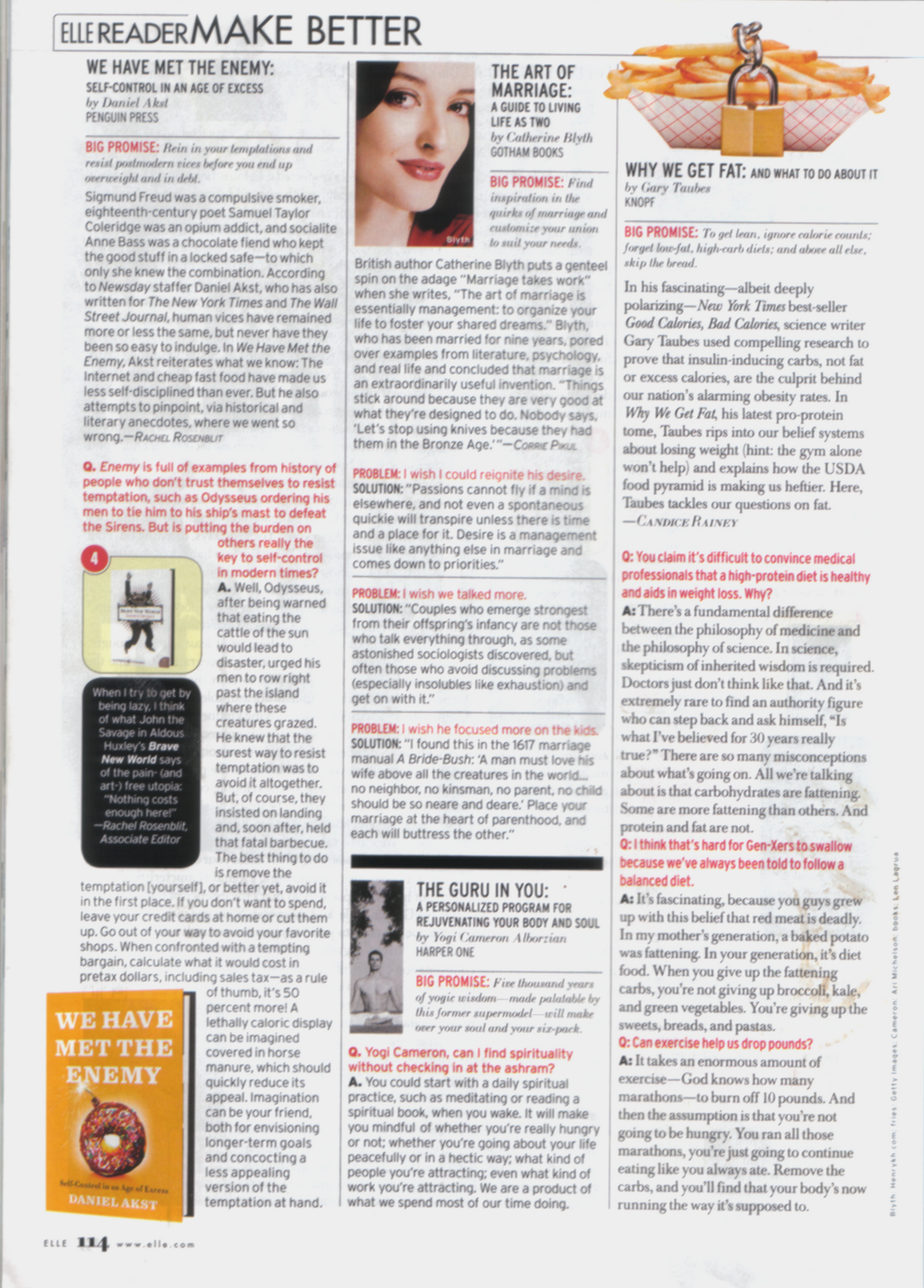
About creamed my pants again when I saw the latest January 2011 Elle magazine...

Featured 3 remarkable things:


1) WHY WE GET FAT by Gary Taubes on the front cover 'What Makes You Fat: how to change your body for good' (see below copyright violation) He describes frustration with medical professionals and the lack of skeptism among them for science (e.g. bad science). 'All we're talking about is that carbohydrates are fattening. Some are more fattening than others...'

2) SJP and her tight, marvelous ballet body [and rack]

3) Pamela Salzman, petite nutrition guru to the celebrities, and her cookfest in the Elle Living Food section. For optimal health she is advocating unrefined, hormone-free foods and shunning gluten, sugar and vegetable oils. Starkly WOW. Beverly Hills is cashing in on the paleo movement without calling it P to the A to the L to the E to the O.


Pantry Swap tips from Salzman's:

Out: Harsh table salt
In: Moderate amounts of mineral-rich unrefined salts -- Celtic, Himalayan, or Maldon -- can be healing.

Out: Overprocessed oils such as corn, canola, and soybean
In: Cold-pressed olive, COCONUT, and sesame oils; they boost immunity

Out: Too much gluten-laden wheat, spelt, rye, and barley
In: Brown rice, quinoa, millet, amaranth, legumes, sweet potatoes, and corn

Out: Mass-produced, hormone-riddled animal meat
In: Happier animals raised in their natural environments; find sources at localharvest.org


Image courtesy of Elle

Tuesday, June 1, 2010

Beach Body: BURN BODY FAT and be 'Forever Young'

Hudson and Jay-Z remake of 'Forever Young' anthem of the 80's
Courtesy Youtube.com


Beach Bodies

Personally... I like beach bodies.

Bikinis... body boarding... surf sun s*x [and...corona + shots] nothing beats Cali...

Glistening abs, tricps biceps, sun toned warm tanned oily skin. Shimmering pheromones.

Summers below the 37th latitude are heightened by muscles, movement and HORMESIS.


Metabolic Networks

What dominates our metabolism? An intricate network of evolutionary metabolic networks that is heavily conserved from the lowliest nematode to the most highly evolved cognitively-appealing, apex predators...

Including YOU.

Thanks LePine for inspiration and links.


'Exercise intensity and Burning Fat: Youve Gotta Move It To Lose It'

This worked for me and it will work for you if you are trying to lose body fat.

It has worked also for the same 5 lbs of body fat I've lost a dozen times in the last 2 yrs secondary to frustrating synthetic (levonorgestrel, a contraceptive endocrine disruptor) and subsequent hormone dysreguation.

Prior animal pharm: 50 # Wt Loss

Thomas Fahey EdD from Fitness Rx For Men is one of my favorite health and fitness gurus and writers. With 'Rx' in the title can one go wrong? ...speaking from a legal drug dealer point of view?

A recent article from Nov 2009 issue featuring both Dara Torres 'Woman Athlete of the Year' and SUPERBOY Oly decathlete (hybrid Asian and African American) Bryan Clay has the article entitled 'EXERCISE INTENSITY AND BURNING FAT: YOU'VE GOTTA MOVE IT TO LOSE IT'.

Love the title. Love the contents. Prof Fahey is an alright guy.


Key: 45 to 90 min 4X per Week Chronic Cardio 60-85% MAX HEARTRATE

Fahey writes, 'Elegant studies by Dr. George Brooks at the University of California, Berkeley showed that the body uses mainly fats for fuel at rest and low exercise intensities. At 65 percent of maximum effort, the body switches abruptly to carbohydrates and uses much LESS FAT [my emphasis]. The rate of fat breakdown in fat cells aslo decreases with increasing exercise intensity. The best method for losing weight through exercise looks like a no-brainer. Train at low exercise intensity because you'll use fat as FUEL....' Our mitochondria and muscles like the heart are adapted and naturally selected to run on FATTY ACIDS as the optimal fuel for endurance and day-to-day activities.


Caveat: ALSO Key -- Exercise INTENSELY in addition to Cardio

Fahey also adds the essential KEY of ripping and shredding body fat is 'The real answer to the question of how to lose fat through exercise is not so obvious. True, you use more fat as fuel when you exercise moderately. But [***hint***] you lose more body fat when you exercise more intensely during a 24-hour period because you use more fat for feul and INCREASE METABOLISM (increase calorie use) more after exercise. Also, you burn more calories during the exercise itself. The total daily energy use is more important for fat loss than the kinds of fuels used during exercise... As stated, intense exercise increases fat use after the exercise is OVER. You use th readily-available carbs during intense exercise, then SWITCH to fats during RECOVERY. The body uses more fats as fuel after an INTENSE workout than after an easy one. Intense exercise increases post-exercise mtabolisms more than light exercise. Run for an hour at 70-80% maximum effort and you get an extra post-exercise calorie-burning bonus...'


6 Pointers: 'Losing Body Fat with High-Intensity Exercise'
  • 'Do 60-90 minutes of cardio at 60-85% percent of maximum effort, three to five days per week... doesn't sound like a lot, but you will lose fat and not muscle...
  • Include interval training in your workout... Interval training includes intense running (sprinting) interrupted by periods of rest orlight exercise... exercise intensely for ONE MINUTE at near-maximum intensity, then repat six to 20 times (depending on your fitness level).... You will notice rapid increases in fitness and fat loss with this kind of training. [TRUE. Sprints in the pool, bike or asphalt for triathlon training has give me the best and most rapid gains and personal fat loss and maintenance]
  • Train with weights at least TWO DAYS PER WEEK. Weight training increases muscle mass [and testosterone + fountain-of-youth-growth-hormone-BURSTS] that will give you a higher metabolic rate. More muscle mass means you burn more calories during the day. Also, you'll look lean and fit if you have more muscle. TRAIN HARD!


  • Stretch after you workout, when the muscles are warm. Maintaining flexibility will help you prevent injury and maintain normal range of motion in the joints. Stretch after exercise during the cool-down period ather than before. [For me, yoga 20-60min after a workout is better than a MASSAGE seriously and the endorphin-releases are nice.]
  • Eat a well-balanced diet. [fats proteins carbs -- don't forget or skimp]
  • Back off if you get injured. Intense training greatly increases the risk of overuse injuries. People who train intensely ride a thin edge between peak performance and injury because they push hard all the time. Back off on the program when your knees, Achilles tendons, hips or back hurt. Take a few days off [or 1-2wks] and then begin again at a lower intensity.'


  • Sample Schedule (2 days rest, 2 days wts, 2 days short cardio+intervals, 1 day long cardio)
    Mon -- Long Cardio (track or treadmill or cycling or elliptical, etc) 60-90 min @60-85% of max

    Tue -- Weight training (1-3 sets of 10 resp for 8-10 exercises, emphasizing major muscle groups)

    Wed -- Interval training (six 200-meter sprints at 90% of max effort resting 3 min betw sprints or 10 one-minute sprints on an elliptical with one minute rest betw intervals) + Short-Cardio (45 min @60-85% max)

    Thur--REST REST REST

    Fri -- Weight training (ditto)

    Sat -- Interval training (ditto) + Short-Cardio (ditto 45 min)

    Sun -- REST REST REST


    UR...A Beautiful MONSTER

    Do you fly ur freak flag high? I don't mind.

    Join the freak nation.

    Be PROUD for being part of the minority rather than the epidemic, growing obese majority.

    Ne-Yo "Beautful Monster"
    Courtesy Youtube.com


    Additional References

    1. FitnessRxformen.com; Vol 7; Number 6; pp 46-49.

    2. The effects of intermittent liquid meal feeding on selected hormones and substrates during intense weight training.
    Fahey TD, Hoffman K, Colvin W, Lauten G.
    Int J Sport Nutr. 1993 Mar;3(1):67-75

    3. The effects of sodium bicarbonate and pyridoxine-alpha-ketoglutarate on short-term maximal exercise capacity.
    Linderman J, Kirk L, Musselman J, Dolinar B, Fahey TD.
    J Sports Sci. 1992 Jun;10(3):243-53.

    4. Serum testosterone, body composition, and strength of young adults.
    Fahey TD, Rolph R, Moungmee P, Nagel J, Mortara S.
    Med Sci Sports. 1976 Spring;8(1):31-4.

    5. Brooks GA, Fahey T, and Baldwin K. Exercise Physiology: Human Bioenergetics and its Applications. New York: McGraw Hill, 2004 (4th edition).

    Saturday, March 14, 2009

    That's the Issue...G-Flux: E ≠ MC2

    As any gurrlll will tell ya -- certain times of the month (e.g. when we're bleeding down our legs) no matter what we eat/don't-eat, girls gain %^&*$weight. Yet... at other times...we gals can eat E-V-E-R-Y-T-H-I-N-G in sight... and... drop pounds... have more energy... more shredding/shedding.

    What's the issue...??

    Human bodies do not obey the laws of matter and physics. Esp... girls... *wink* We break all the metabolism rules... and hormones fluctuate. Unlike physical matter, hormone-cascades rule energy flux, flow and balance.


    Biological Energy Turnover

    Often like life... the more you give, the exponentially more . . . you get.

    Energy in alive, biological systems appears to follow the same rule, to me. With more propelling exercise and intense power demands, the human body is the greatest machine to turn over and kick out more outputs than inputs. Mitochondria, our tiny nuclear power-generating plants, double...or even...QUINTUPLE in quantity and quality for future expected thermodynamics. (Conversely, they are degraded with 'hibernation signals' -- insulin, low thyroid, movement-deficiency + subsequent T, hGH, adiponectin hormone declines, high carbs, high F**C-tose, x-s omega-6 veggie oils, diminished daylight/Vitamin D deficiency, EPA+DHA insufficiency, micronutrient/co-factor deficiencies, etc.)


    Frank Starling's Rule...of Heart/Muscles Biophysics:

    Max Cardiac Output = Max Heart Rate X Max Stroke Volume

    For us Paleo people, during functional, natural exercise, how does the heart provide so much ATP, energy packets, with constant and high outputs? At high intensity efforts...like Tabata squats? 100 burpee-pullups? interval 400m sprints? Oly-weight-lifting like dead-lifts and power cleans 8 x3...?? Which then translate effortlessly (without practicing) to faster running, flying across hills, and jumping to never imagined heights...!? I n d e e d y . . . Olympic-lifting explodes vertical-leaping and bounding better than... Superman himself. Another one of our important muscles, the heart, works the same way. It is a muscular biological pump. How strong the heart can pump blood-volume and how efficiently oxygen is supplied are the factors that determine the max work and max volume delivered with every heartbeat. See above Frank Starling formula. With the proper training, the heart muscle cells in fact grow BIGGER (yea)... THICKER (yea-aaahh) with mitochondria, the ATP-power-generators... MORE EQUIPPED with enzymes and co-factors to transfer energy -- fatty acids, lactate, glycogen/glucose -- and to increase 'end-products' neutralizers (Coenzyme Q10).

    Our heart cells (cardiomyocytes) are one of nature's best examples of bio-engineering for structure, composition and mechanical genius. They beat for you every second...of your life ~100,000 times per day.

    Unless you are . . . Lance . . . only ~46,000 times per day at rest. Uuummm...I'd like to see...umm I mean... study... his... drool-inducing PPARs... *wink* I hear he's finally picking up kettle balls...
    What maintains energy supply at peak aerobic exercise in trained and untrained older men? Amir R et al. Gerontology. 2007;53(6):357-61.


    In an untrained heart, the volume of mitochondria take up ~5% of the cell. However, in hearts of athletes, mitochondria reside in as much as 20-25% of the heart cell. That is five-times more massive...! Harness the power of your mitochondria... by optimizing your G-flux (see below about energy flow).

    Maximal cardiac output increases in response to exercise training. Intensity determines how fast this happens.

    In fact excessive endurance exercise (see below 24-h trained endurance results) worsen oxygen efficiency in mitochondria. Short intense, resistance, interval exercise on the hand produce quick generation of mitochondria in a few days, improved glucose utilization, insulin reduction, and activates PPAR-Delta, the switch for anti-inflammatory and pro-immunomodulatory actions in the body.
    Reduced efficiency, but increased fat oxidation, in mitochondria from human skeletal muscle after 24-h ultraendurance exercise. Sahlin K et al. J Appl Physiol. 2007 May;102(5):1844-9.
    Regulation by exercise of skeletal muscle content of mitochondria and GLUT4.Holloszy JO. J Physiol Pharmacol. 2008 Dec;59 Suppl 7:5-18.
    Exercise interval training: an improved stimulus for improving the physiology of pre-diabetes. Earnest CP. Med Hypotheses. 2008 Nov;71(5):752-61.
    Regulation of muscle fiber type and running endurance by PPARdelta. Evans RM et al. PLoS Biol. 2004 Oct;2(10):e294.
    Genetic variations in PPARD and PPARGC1A determine mitochondrial function and change in aerobic physical fitness and insulin sensitivity during lifestyle intervention. Häring HU et al. J Clin Endocrinol Metab. 2007 May;92(5):1827-33.
    Mitochondrial myopathies: diagnosis, exercise intolerance, and treatment options. Tarnopolsky MA, Raha S. Med Sci Sports Exerc. 2005 Dec;37(12):2086-93. Review.
    Resistance training, sarcopenia, and the mitochondrial theory of aging. Johnston AP, De Lisio M, Parise G. Appl Physiol Nutr Metab. 2008 Feb;33(1):191-9. Review.
    Circuit resistance training in chronic heart failure improves skeletal muscle mitochondrial ATP production rate--a randomized controlled trial. Hare DL et al. J Card Fail. 2007 Mar;13(2):79-85.
    Antioxidant enzyme activity is up-regulated after unilateral resistance exercise training in older adults. Parise G, Phillips SM, Kaczor JJ, Tarnopolsky MA. Free Radic Biol Med. 2005 Jul 15;39(2):289-95.
    Muscle fat oxidative capacity is not impaired by age but by physical inactivity: association with insulin sensitivity. Morio B et al. FASEB J. 2004 Apr;18(6):737-9.
    Strength and aerobic training attenuate muscle wasting and improve resistance to the development of disability with aging. Booth FW et al. J Gerontol A Biol Sci Med Sci. 1995 Nov;50 Spec No:113-9. Review.


    What is the preferred energy source of heart and skeletal muscle cells?

    Well...it certainly aint Gu or sports drinks or energy bars or carb-loading. As we exercise and become more trained, the preferred source for mitochondria is fatty acids...both our temporarily stored fats in skeletal muscle and the band of saturated fat across the heart...

    "Proper heart function relies on high efficiency of energy conversion. Mitochondrial oxygen-dependent processes transfer most of the chemical energy from metabolic substrates into ATP. Healthy myocardium uses mainly fatty acids as its major energy source, with little contribution of glucose."
    Metabolic and genetic regulation of cardiac energy substrate preference. de Jong JW et al. Comp Biochem Physiol A Mol Integr Physiol. 2007 Jan;146(1):26-39. Epub 2006 Oct 3. Review.


    "Mitochondria in skeletal muscle tissue can undergo rapid and characteristic changes as a consequence of manipulations of muscle use (e.g. MOVEMENT...use it or lose it) and environmental conditions . . . Additionally, a shift of substrate metabolism toward a higher reliance on lipids is observed, structurally reflected as a doubling of the intramyocellular lipid content . . . Transcription factors AP-1 and PPARalpha/gamma and the protein kinase AMPK are signaling molecules that transduce the metabolic and mechanical factors sensed during endurance training into the complex transcriptional adaptations of mitochondrial proteins."
    Plasticity of skeletal muscle mitochondria: structure and function. Hoppeler H, Fluck M. Med Sci Sports Exerc. 2003 Jan;35(1):95-104.


    G-Flux: Building the Ultimate Body (excerpt)
    by Dr John M Berardi (T-Nation.com)

    What's G-Flux?

    "Well, G-Flux, otherwise known as energy flux (or energy turnover) is the relationship between energy intake and expenditure. It's the balance between the two. Put another way, it's the amount of calories you "turn over". ...Having a high G-Flux is 100%, without a doubt, absolutely critical to building your ultimate body – which I'm assuming includes strong, functional, well-adapted muscle, low body fat, and great health."


    Energy In ≠ Energy Out

    That's the thermodynamic i-s-s-u-e . . .


    G-Radio: 'That's the issue...SoulJaBoytellem...'
    *air-kiss-u* ...hormones... philematology...another place ancestral hormonal pathways rule