Tuesday, September 10, 2013

Korean Pepper Paste Burns Body Fat, Soil-Based Organisms (SBO), Gut Microbiota -- New Study 'Kochujang, fermented soybean-based red pepper paste, decreases visceral fat and improves blood lipid profiles in overweight adults'

Gochujang -- Staple at our House

When we first moved to Shanghai, we ate Bibimbap at least once or even twice every week.  It was our go-to comfort (Cali) food until our food sources diversified and expanded with the help of other expats and finding reliable organic/local/non-GMO purveyors.  Gochujang (which contains soil-based Firmicutes, B. subtilis, etc) is good for HEAT and tummies. The one on the right is a traditional product which I brought (eg smuggled) in from California (refridgerated area of the Korean shop in Albany, north of Berzerkeley). Both are Korean products but unfortunately the red one on the left is ubiquitious and popular in markets both in America and Shanghai, China. (BTW neither are gluten-free.) The first ingredient of the modern, processed version (red box) is guess?

Prior to 2008, apparently Korea didn't open its doors to GMO corn but that changed when the price of non-GMO corn went up to $400usd per ton (from $150); GMO corn was only $50usd per ton (source: ENN). Money talks and the grind of multinational corporations continues..?? Did this trump the price of cane sugar?!? GMO corn infiltrates internationally... Why does our food continue to become more and more perverted and unrecognizable (AND SUPRATASTY, ADDICTIVE, AND UNSUBTLE).


Ingredients (Right): Glutinous rice flour, Salt, (hopefully fermented and non-GMO) 
Soybean flour, Malt syrup, Hot Pepper Powder
Ingredients: (Left):  See below, it's the Korean SunChang brand 
(first ingredient: GMO CORN SYRUP; last ingredient 'seed malt')
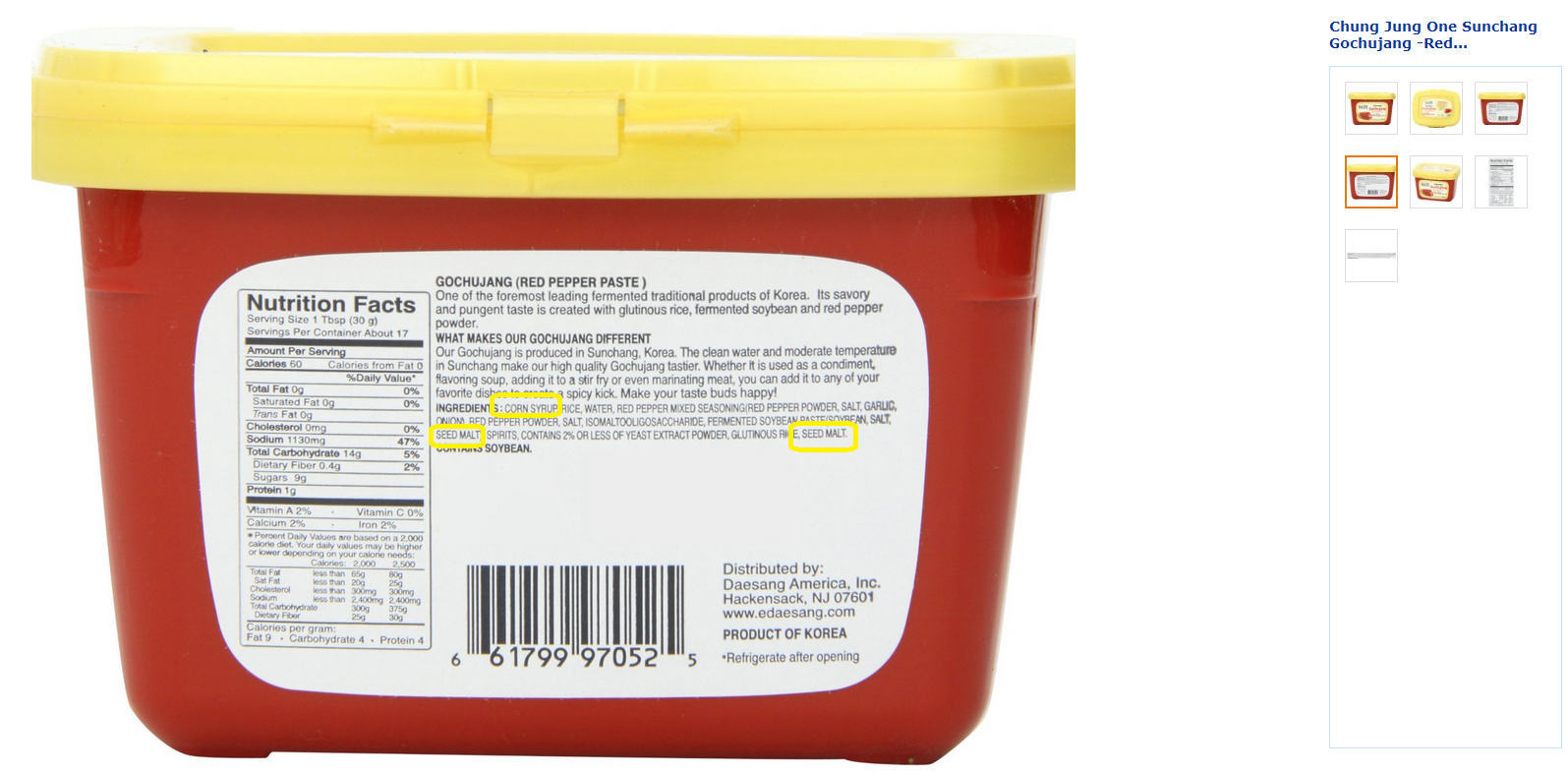
Source :  Amazon


'Seed Malt' (?Arsenic, Heavy metals) in Modern Processed Gochujang

The tastiest ingredient is perhaps the most vile, seed malt. Even the traditionally prepared one contains malt syrup which is likely to come from gluten-containing barley malt.  I had to look up what seed malt is. In many Asian countries, the unami flavor is so desired and favored but hard to achieve from a food science perspective without time-consuming aging processes and fermentation.  Seed malt is the short cut.  Fast, cheap and full of nasties.  The starch that it is all germinated and cultured in is not specified but the food industry generally uses: corn, wheat, barley or the like.  Definition of seed malt (source: KFDA Korean Food Additives CodeThere are crude seed maltand powdered seed malt. Crude seed malt is obtained from a culture where starter of Aspergillus kawachii, Aspergillus oryzae, Aspergillus usamii, Aspergillus shirousamii, Aspergillus awamori or Rhizopus genus are separately or mixedly inoculated so that spores are inserted into a pasteurized raw material containing starch. Powdered seed malt is obtained by collecting pure spawn spores by a special method. 

Lot of fungal species...(but Aspergillus at least contains xylanases which break down gluten)

To eliminate the fungal species and 'clarify' I believe production of 'seed malt' uses an absorber which contains heavy metals and/or arsenic. This is a problem in German beer. Kieselguhr (diatomaceous earth) is used in beer processing to filter and remove yeasts, hops and particles (source: sciencedaily.com). How heavy metals and arsenic otherwise can test positive in a starch malt, I don't know. Fungicide-contaminated rice sources? HFCS (high fructose corn syrup) due to mercury containing chlor-alkali processing (Dufault et al, EH 2009)? Right: list of arsenic food contaminants (source: Codex Committee 2011).


Science Behind Ancestrally/Traditionally Fermented Gochujang

Being in Asia has certainly given me an appreciation of the variety of fermented foods in countries outside of the USA. We have always been fans of Korean food which has one of the most easily accessible sources because typically in the USA, every good Korean restaurant ferments their own variety of fermented tofu, beans, radishes, green beans, cabbage and raw crab/seafood... (as each family does in traditional homes that adhere to the old way... and after making our own hot pink sauerkraut HOT D**MN THIS IS A PART TIME JOB)

Good news, it is all worth it.

Fermented foods are packed with cheap prebiotics and even cheaper soil based organisms that make the gue microbiota a friendlier and happier place, crowding out overgrowths of yeast, parasites, worms and other un-friendlies and promoting growth of healthier gut epithelium and immunity (70-80% of our immune system is in the gut).


Brand Spanking New Study...
This clever study verifies many things that we know already.  Eating the poop/probiotics from healthy, lean people is perhaps not harmful for you...  It can make a mouse leaner, thinner and move from a fat phenotype to a leaner, less body fat profile.  Clostridia (Firmicutes) from Ln (lean) types invaded the guts' microbiota of Ob (obese) cagemates via copraphagia (eating of poo).

Recall, I like coprophagia... [cough cough] for B12-deficient vegans.  It's like a fecal transplant... (DIY fecal transplant: Silverman et al, 2010).


New Study: 'Kochujang [KCJ], fermented soybean-based red pepper paste, decreases visceral fat and improves blood lipid profiles in overweight adults'  (Cha et al, 2013)  [PDF HERE]

"The KCJ is produced by fermenting powder red peppers
combined with powdered meju (fermented soybean
powder), salt, malt-digested rice syrup, and rice flour for
about six months. The fermentation process extends the
storage period while increasing bioavailability of bioactive
ingredients [4] such as free amino acids, peptides,
alcohols, organic acids, capsaicin and flavonoids [5,6].
KCJ has unique flavors of sweet and hot red pepper
combined with savory soybean protein hydrolyzate and
nucleic acids. In recent years, KCJ has gained its popularity
outside Korea for its taste and health benefits derived from
the several ingredients [7-16] that are produced by the
fermentation process [17-22]. The functional substances
either singularly or in combinations have exhibited antiobesogenic,
anti-oxidative, and anti-mutagenic properties
in several in vitro experiments and in various murine
models [7-16]. Anti-obesogenic and anti-atherogenic properties
of fermented soy products have been demonstrated
in obese adults [23], possibly through modulation of
hepatic acyl-CoA synthase, carnitine palmitoyltransferase I,
and acyl-CoA oxidase [24]."

My Summary
  • The n=56 overweight subjects were given ~2 tablespoons of Kochujang daily (approx daily Korean consumption amount) as supplements in this RCT, and checked at 5 clinic weights during the 12-week long study duration.  Visceral fat was assessed by CT.
  • WHR (~0.9), BMI (~26-27%), body fat % (~33-34%), BP (~117-119/75) and HgbA1c (~5.4%) all did not change however both groups lost subcutaneous fat (47.9 cm2 v. 53.2 cm2, study v. control, respectively).
  • Visceral fat was dramatically dropped in the study group receiving the kochujang supplements (which were ++ in addition to regular daily amount) compared to placebo: -4.8 cm2 v. +0.4 cm2 (p=0.001).  ~~Ten-fold differences...
  • Interesting placebo effect on subcutaneous fat loss...
  • Perceptible changes in TG and apoB (which is super-tightly related to TG) were seen too (p=0.049). TG decreased.  It's hard to see HDL changes unless big weight, fat, dietary changes are seen, and that was the case.
  • Thankfully, none of the researchers were funded by SunChang (the modern, processed Kochujang manufacturer).


Thoughts? 

 I don't agree with their conclusions entirely. Yes, 'capsaicin in red pepper, isoflavon aglycones, and peptides from fermented soy' all are good things, but the placebo group probably ate these as well in small amounts (because they lost subcu body fat).  In fact, researchers admit they really are clueless stating 'However, the mechanisms responsible for these observed effects are yet to be elucidated.'


Evolution, Interspecies Guts, Soil-Based Organisms and Achieving Leanness

Discounting eating disorders and celebrity/model fanatics, most normal people can achieve leanness by normal lifestyle habits, balanced diets, fixing nutritional deficiencies, avoiding being 'germ-free' and broad spectrum antibiotics/antifungals, avoiding nutritional pitfalls (excess n6 pufa, excess refined starches, mercury, arsenic, PCB/pesticides/BPA/plastics and other estrogen-mimics), detoxing environmental toxins, avoiding stupid excesses (alcohol binges, brownie binges, sleep deprivation, chronic endurance sports, etc) and balancing hormones. All the above also fix the gut microbiota according to emerging pubmed data.

This study exemplifies it... though the research authors fail to identify the role of the gut, immune system, and microanimalia found in fermented kochujang.

Kim chee: The biome structure of kochujang's counterpart kim chee has been more deeply profiled.  Kim chee has been massively PCR microarrayed, and it does indeed also contain as one would expect (from dirt) archaebacteria and good yeasts (like Saccharomyces).  I cannot find in this article if the species S. boulardii  -- one of my favorite yeasts -- is listed but fermenting rice bran with S. boulardii yields  bioactive candidate metabolites that reduce B lymphoma growth in vitro.   Kim chee in most studies is characterized by 3 main genera LactobacillusLeuconostoc and Weissella. Particular species that are speculated to be found in kim chee cultures are: Leuconostoc species-- Le. mesenteroides, Le. kimchii, Le. citreum, Le. gasicomitatum, and Le. gelidum, the Lactobacillus species -- Lb. brevis, Lb. curvatus, Lb. plantarum, and Lb. sakei, Lactococcus lactis, Pediococcus pentosaceus, Weissella confusa, Weissella kimchii, and Weissella koreensis.

Human GITs (gastrointestinal tracts) are part-carnivore and part-frugivore.  Our shrunken, medium-sized small intestines possess exceptional digestive capacities and hyper-efficient absorptive surfaces synonymous with carnivores, not herbivores (3-5X our height, not 10X as in herbivores).   We have enzymes to breakdown protein, fats and complex carbs to base, fundamental constituents (amino acid, fatty acids, glucose). The rest (soluble and insoluble fiber) is fermented in the hindgut by our friendlies into further end-products that we harvest and absorb (B12, butyrate, etc)...

Kochujang is special.

Maybe it is because it is fermented and digested by dirt-commensal microbial critters in carby, high protein/fat environment (rice + soybeans? ...which are fatty AND proteinous (complete proteins incidentally).  Why it sounds... SO ODDLY... OMNIVOROUS...

Our gut microbiota in the large intestines has the ability to manufacture enormous supplies of butyrate, a short chain fatty acid, that plays an imperative role in healthy guts for regulating and controlling inflammation.  Butyrate is mostly produced by Firmicutes species.  Butyrate not only enhances the integrity of the gut by inducing mucin synthesis but also is the main energy source for colonic epithelia. By lowering inflammation, I believe, butyrate and gut microbiota synergism/cross-talk with immune system lymphocytes and gut epithelia produced the lowering of the (minor) visceral fat compartment and improvements in metabolic flux in the test subjects with Kochujang supplements.

Previous animal pharm:
Burn Body Fat Loss with Saturated Fat (Butyrate and MCT Oil)


Kochujang Contains Mostly SBO, Soil Based Organisms (E.G. FROM DIRT)

Kochujang has been analyzed it contains more soil-based organisms (SBO) Bacillus versus kim chee's Lactobacillus genera.  The bacteria in Kochujang is predominantly Firmicutes (93.1%) species, simliar to the SFB (segmented filamentous bacteria) discussed in the last post.

"Through the analysis of 13524 bacterial pyrosequences, 223 bacterial species were identified, most of which converged on the phylum Firmicutes (average 93.1%). All of the kochujang samples were largely populated (90.9% of abundance) by 12 bacterial families, and Bacillaceae showed the highest abundance in all but one sample. Bacillus subtilis and B. licheniformis were the most dominant bacterial species and were broadly distributed among the kochujang samples. Each sample contained a high abundance of region-specific bacterial species, such as B. sonorensis, B. pumilus, Weissella salipiscis, and diverse unidentified Bacillus species. Phylotype- and phylogeny-based community comparison analysis showed that the microbial communities of the two commercial brands were different from those of the local brands. Moreover, each local brand kochujang sample had region-specific microbial community reflecting the manufacturing environment [e.g. probably not SunChang, Inc]."  Source : Nam et al, J of Food Science, 2012.


Please Pass Your Good Cuddies/Firmicutes -- SBO Also Breakdown Gluten

The two most dominating species found in this study of Kochujang are soil based organisms -- B subtilis and B. licheniformis.  In experiments, B subtilis and B. licheniformis, digest gluten; they're frequently found in sourdough ferments, naturally-occurring on rice straw, Japanese traditional natto, Chinese fermented black bean sauce, Nigerian fermented soy 'Daddawa', Thai fermented foods, Indian fermented soy Hawaijar, fermented shrimp heads, Korean fermented black soybean Chungkookjang, and raw dairy.

The undigested gluten peptide, that is most toxic to celiacs and induces immuno-triggering damage to the small intestine, is broken down by enzymes from either B. subtilis* or B. licheniformis*.  HLA DQ2/8 on APCs have extremely attractive binding affinity ('epitope') to undigested gluten (for example, 33-mer alpha-gliadin).  Consequently, APCs will present undigested gluten to CD4+ T-cells as invaders, thus setting off the cascade of TH1, Th17 and Treg hyperimmune responses.

Celiac is actually an autoimmune disease of the DQ2/8-gluten complex (IC, immune complex) in the small intestines and other affected organs.  At least 60 immunogenic gluten peptide sequences exist in modern-hybridized industrial wheat.


Conclusion

In gluten intolerant folks, TH17 is usually slightly or entirely j**cked up.  TH17 may lack training/regulation, and intestinal hyperpermeability is likely present.  Food antigen intolerances consequently pop up secondary to hyperpermeability.  The commensals in the gut microbiota shape immunity and prime and promote the proper differentiation of TH17 and other cell subsets.  Is this one of the primary differences between the obese and the lean?  The gluten intolerant and the gluten tolerant? The celiac HLA DQ2/8 and the non-celiac HLA DQ2/8?  What gut toxins prevent seeding of commensals? Bt GMO corn? Mercury and other DPP-IV inhibitors (microvilli DPP-IV digests gluten)?

SBO and their molecular components appear to play a great part in re-balancing the distribution between arms of the vast immune system: TH1 v. TH2 v. TH17 v. Treg.  When the gut barrier becomes tight and competent again, food intolerances reverse or disappear.  Undigested gluten won't pass through.  The gut epithelium is but one cell layer thick.

Permeability perhaps is the bane of advanced hominids. We diverged from primates with zonulin, the gate keeper of intestinal permeability.

Why?  For the the continuation of post-natal growth of the gigantic human brain?  For the extended longevity and flexibility of advanced hominids? I'm not certain but I suspect it has to do with ontogeny and how our premature babies require maternal immunoglobulins, IgM in breastmilk, for 18 months to 3 years old of age for the immunoprotection until their own immune systems mature, interact with the environment and develop.

For some individuals, soil-transmitted hookworms are solutions and the key... together, SBO/dirt, kochujang, coprophagia, and 'kraut may be fine, and problematic pathogenic (microbial/yeast) overgrowth and parasites can perish.


SBO Related Sources and Probiotics:

These are all shelf-stable because SBO are spore-forming and don't require refridgeration. In immunocompromised and susceptible individuals, probiotics can exacerbate the root problem. Introduction of lactobacillus organisms, bifida, SBO or other probiotics may increase gas and bloating if SIBO (small intestinal bowel overgrowth) is severe, just as introduction of fiber/inulin/FODMAPs can induce gas and bloating until gut initation and adaptation has gradually occurred.


Probiotic that includes B. licheniformis:  Body Biotic

Protiotics that include SBO:
Prescript Assist (B subtilis, etc)
FloraBalance, Bacillus Laterosporus BOD
Ultimate Acidophilus with Bacillus Coagulans
AOR Clostridium Butyricum
Thorne Bacillus Coagulans
Threelac (B subtilis, etc)
Primal Flora (B coagulans, etc)
Primal Defense (B subtilis etc)   [the wildly successful original formulation had both, ~ + B licheniformis]


Gluten-digesting Digestive Enzymes:
Devigest (B subtilis + enzymes from B licheniformis, etc)


Sources: ASSESS and CNSweb.com


Catch This:  Making Gluten-Free Korean Chili Paste Gochujang (CriticalMas blog)

Thursday, September 5, 2013

Hot Pink Kraut in The New Kitchen

Hot Pink 'Kraut!
Made by My Kids


We moved and it's been hectic. This past summer, my kids were so fortunate to attend the most jiving cooking class at the Albany Community Center in Northern California, where their sweet teacher Ilah Jarvis is not only a Baumann College Nutrition graduate but also an integrated practitioner. They learned all the basics for soaking and cooking nuts, (GF) grains and legumes, dairy-free pesto, meats, salads, dressings, sides, and spent ONE WHOLE DAY on the benefits and techniques of fermenting vegetables (kim chee, sauerkraut, pickles).

Their second batch of hot pink kraut is in the crock (gift from our Fujian ayi) and bowl. You fill the moat at the top with water to provide a tight seal that allows anaerobic fermentation.  Formed gas can escape one-way across the seal.  I used the old 'kraut as a starter for our inaugural batch at the new abode in the burbs.  (Yes we are outta the grind and grime of the Shanghai Pudong city...) This recipe below is my daughters' favorite because it tastes like kim chee but sans spiciness.  I had no idea how easy, inexpensive and gratifying it is to eat your own 'kraut... In the States, I fell in love with Sonoma Brinery's RAW SAUERKRAUT this summer.  Was so pleased I could find it in fresh supply everywhere (WH, Andronico's, etc).  Though we love it but kraut is a bit of work -- need a minimum 3 hours to prepare 1-2 weeks worth (one person; for 2 kids = 2 hours + undisclosed hours clean up (MOM)).  However, it's so guuuuud...we eat it almost as fast as it's made...


Tickled Pink Ginger Kraut (adapted from HERE)

Ingredients
1 Head Green Cabbage
2 Heads Purple Cabbage
6 Carrots
4-5 tbsp Sea Salt
2-4 tbsp Fresh Garlic
1 Lemon Squeezed

Combine and squeeze squeeze squeeze.  Minimizes the juicing out and 'organic explosions' later, as my kids told me.  If you add a starter, days on the counter is shortened to only 3 days, otherwise 5-7 days at room temp is needed to get a good ferment going.  Sander Katz's book Wild Fermentation is awesome for more ideas.


New science media on the microbiome and evolution...


(1) Convergent Evolution of Hyperswarming Leads to Impaired Biofilm Formation in Pathogenic Bacteria (hat tip: NB)

Cell Reports, Volume 4, Issue 4, 697-708, 15 August 2013
AuthorsDave van Ditmarsch, Kerry E. Boyle, Hassan Sakhtah, Jennifer E. Oyler, Carey D. Nadell, Éric Déziel, Lars E.P. Dietrich, Joao B. Xavier
HighlightsExperimental evolution of swarming in P. aeruginosa generates hyperswarmers
Parallel evolution in the flagellar regulator FleN is causal for hyperswarming
Point mutations in FleN produce multiflagellated hyperswimming bacteria
There is an evolutionary trade-off between motility and biofilm formation
SummaryMost bacteria in nature live in surface-associated communities rather than planktonic populations. Nonetheless, how surface-associated environments shape bacterial evolutionary adaptation remains poorly understood. Here, we show that subjecting Pseudomonas aeruginosa to repeated rounds of swarming, a collective form of surface migration, drives remarkable parallel evolution toward a hyperswarmer phenotype. In all independently evolved hyperswarmers, the reproducible hyperswarming phenotype is caused by parallel point mutations in a flagellar synthesis regulator, FleN, which locks the naturally monoflagellated bacteria in a multiflagellated state and confers a growth rate-independent advantage in swarming. Although hyperswarmers outcompete the ancestral strain in swarming competitions, they are strongly outcompeted in biofilm formation, which is an essential trait for P. aeruginosa in environmental and clinical settings. The finding that evolution in swarming colonies reliably produces evolution of poor biofilm formers supports the existence of an evolutionary trade-off between motility and biofilm formation.


(2) How hormones and microbes drive the gender bias in autoimmune diseases (hat tip: Angela)

Immunity, Yurkovetsky et al.: "Gender bias in autoimmunity is influenced by microbiota." Free PDF.
Sex hormones are known to play an important role in the gender bias of autoimmune diseases. But studies have shown that environmental influences and other non-hormonal factors also make a difference. For instance, animals that lack gut microbes because they were raised in a germ-free environment do not show a pronounced gender bias in type 1 diabetes, which is generally considered to be an autoimmune disorder. Until now, it has not been clear how hormones and microbes work together to influence the gender bias in type 1 diabetes and other autoimmune diseases.
In the new study, Chervonsky and his team found that microbial communities in male and female mice became different once the mice reached puberty, whereas microbes in females and castrated males were more similar to each other. These results suggest that sex hormones contribute to gender-specific changes in microbial communities. When the researchers raised mice in a germ-free environment and then exposed them to different types of bacteria, they discovered that only certain microbes specifically protected males against type 1 diabetes.
Taken together, the findings suggest that hormones and microbes cooperate with each other to protect males against autoimmune diseases. "Our study has helped to establish the general principles of how hormones and microbes interact with the immune system, which is the first significant step to get to the stage of developing new therapies."


I find this umbrella publication of multiple mouse experiments really fascinating and neat as it found robust and vigorous testosterone levels to be protective for male mice against the Type 1 Diabete (T1D)  mouse model (usually it is high estrogens -- E1 E2 4OHE1 16OHE1 etc).  I wish these researchers measured the estrogens in these mice because the picture seems incomplete...

Segmented filamentous bacteria (SFB) were the population found to be not only most protective but also associated with the highest testosterone levels in male mice.  It appeared to elevate mouse androgen concentrations to a threshold necessary for autoimmunity protection.  Can poor gut flora knock out your T?  Also interestingly, the commercial VSL #3 frequently used therapeutically for IBS, Crohn's and other GI disorders was found (again, remember, in mice) to be associated with lower T.  That was an odd finding as VSL #3 is high in Lactobacillus and other strains typically associated with balanced flora.


SFB and Autoimmunity
Photo Credit: Ivanov, Littman 2010


We know already that gut dysbiosis and anything excessively taxing raises cortisol which can sap and suck the steroids out testosterone (for males) and progesterones (for females), if chronic and enduring.  When this dysregulation occurs, inflammatory estrogens are favored over metabolism of anti-inflammatory estrogen moieties. Estrogen has a role as a stress signal across both plant and animal kingdoms. Some of our best antioxidants (EGCG, curcumin, genistein, resveratrol) are weak phytoestrogens synthesized by plants in response to stressors.  In every chronic disease -- prostate cancer, breast cancer, hypertension, heart disease (TACT), osteoporosis, PCOS, infertility, autoimmunity -- endogenous inflammatory hydroxyestrogens and/or xenoestrogens/metallo-estrogens are either elevated or outweigh the beneficial the estrogens (2-OHE1, etc).


Intimate Crosstalk Between SFB
With Intestinal Cells
(photo credit: Nature)


Heretofore virtually undiscovered in humans (only insects and many mammals), earlier this year 2013, Yin et al in Hangzhou, China characterized one of the earliest human commensal SFB. Via 16S rRNA-specific PCR detection, the intestinal contents of 251 humans, 92 mice and 72 chickens were analyzed. The researchers state "The results showed SFB colonization to be age-dependent in humans, with the majority of individuals colonized within the first 2 years of life, but this colonization disappeared by the age of 3 years... In summary, our results showed that SFB display host specificity, and SFB colonization, which occurs early in human life, declines in an age-dependent manner." Formerly known as 'Candidatus Arthromitis' , like 80-90% or more of our intestinal microbiota, they are unculturable anaerobic bacteria.  SFB hail from the Firmicutes phylum (Order: Clostridia). Like many of the good gut flora they appear to play instructive roles in stimulating proper TH17 and Treg responses in for immune fitness. We need some Firmicutes -- not a ton as it is overdistributed in nearly every obesity microbiota analysis compared with Bacteroides (or it can be too low and eclipsed by Bacteroides) -- but an adequate and sufficient amount it seems and the right kind appear good. Might there be a spectrum of good v. bad Firmicutes like all things? Can 'kraut and other fermented veggies help add the good anaerobic micro critters?  I hope so.

One analysis using pyrosequencing techniques to quantify and identify the microbial composition of traditional Korean fermented kochujang which is a ubiquitious condiment made of of red pepper, glutinous rice, salt, soybean and the naturally occurring microanimalia (e.g. dirt organisms). Of the 223 species discovered, 93.1% were Firmicutes, including Bacillus subtilis, a strain known to digest gluten and casein (as also found in traditional sourdough and other fermented foods). YUM! Gochujang is the hot pepper paste for bibimbap.  Modern, post-industrial gochujang actually is tainted by high amounts of gluten/wheat as a filler, flavor, preservative and 'spice' unfortunately.  FYI, for the real stuff, find a Korean market and look in the refridgerated area.

Friday, June 7, 2013

(NSFW) B**bies, B**bies, B**bies... I see..chopped off b**bies

Sunny Tales
Sunlounger

If you know me (and this blog) you know I love racks and b**bies (incl mine).

So it is exxxtremely disheartening when I hear of individuals choosing to go through the agony of cortisol-spiking surgeries to remove their respective rack and b**bies. Now that Jolie' preventive bilateral mastectomay has hit the big news, I see chopped off b**bies and ovaries everywhere. [Cue: Sixth Sense movie music]

Sayonara b**bies


LOL. The horse and I will miss the real thang


Breasts and B**bies: Chock Full of Both Omega-3, MCT (medium chain triglycerides) and Taurine

Our breasts serve an evolutionary function as storage for all the goods things that need to be passed to the next generation, besides adipose storage and breastfeeding. Omega-3 fatty acids from seafood, grassfed game, herds, and free range poultry are selectively stored in breast, gluteal, abdominal and thigh fat. And the amount that gets stored in the breasts and other fatty tissues is governed in a dose-dependent fashion over time. The nutrients in the breast are important not only for lactation (year 1-2 for newborns) but also for gestation.  Our breasts become factories to feed the next generation all the things that nourish and grow the massive homo sapien brain and forward-gazing, stereoscopic, color vision, X-ray eyeballs, which doubles in physical size during the first 12 months of life. The contents of breast milk are super foods for newborns: MCTs (caprylic acid, lauric acid), omega-3 fatty acids (EPA + DHA), taurine, vitamin A, vitamin D, magnesium, zinc, iodine, colostrum, amino acids, galactose, IgM, immunoglobulins, protective enzymes, epidermal growth factor, etc. For certain nutrients, naturally, maternal supplementation also works when the mom cannot breastfeed (hormone imbalances, anatomical issues, neonatal twisted tongue, etc).

A baby is born with inherent 'leaky gut' (intestinal permeability) for the first few months in order for some of the larger protein molecules and mom's immunity to pass directly into their blood stream for immunoprotection. Since the baby has an underdeveloped and immature immune system, there is no point in vaccinations (full of toxic aluminum or mercury) on Day 1 of life (assinine).

Many factors in breastmilk subsequently raise of the IQ of newborns who breastfeed.  In one study, the breastmilk (not necessary connected with the close maternal-baby contact, milk in tube) was associated with a 8.3 point increase in IQ testing in preterm children at age 7.5-8 years of age compared with no breastmilk.

See prior animal pharm:  MCT Oil (coconut oil, breastmilk) kick the crapola out of olive oil

Credit: Celeb*tchy
higher? harder? pointier?
Good job Kristi Funk MD


On Nursing
"Its unique recipe of fatty acids boosts brain growth and results in babies with higher I.Q.'s than their formula-slurping counterparts. Nursing babies suffer from fewer infections, hospitalizations and cases of sudden infant death syndrome. For the mother, too, breast-feeding and its delicate plumbing of hormones afford protection against breast and ovarian cancers and stress. Despite exhaustion, the in-laws and dirty laundry, every time we nurse our babies, the love hormone oxytocin courses out of our pituitaries like a warm bath. Human milk is like ice cream, Valium and Ecstasy all wrapped up in two pretty packages."  Source:  NYT Toxic Breast Milk?


Breastfeeding: Good way to detox pesticides, metals and PCBs (flame retardants)

Unfortunately our breasts store both the good and the bad... our fatty breast tissues are magnets and reservoirs for fat-soluble toxins and heavy metals from our produce (pesticides), commercial meat (growth hormones, pesticides), marine fish and seafood, pharmaceuticals (aluminum antacids, mercury/Al from vaccines, etc), dental (mercury and other metals from amalgam and titanium dental implants), Teflon cookware and coated clothing (PFOA), and environment (flame retardants, mercury/arsenic from coal burning plants which supply 40-50% of USA energy, aluminum from municipal water, blah blah blah).  The individuals who are least likely to have the biochemical mechanisms to chaperone and eliminate these modern industrial toxins, are the individuals most highly likely to develop inflammatory conditions including cancer, autoimmune diseases and Western chronic diseases.

Some of the identified genetic variants are MTHFR (Amy Myers MD), GSTM1 (Mark Hyman MD), COMT, ApoE4, CBS, GSTT, BRCA1/2, and several other emerging ones. A functional medicine doctor and dietician, Dr. Elizabeth Boham MD talks about how she developed breast cancer in her 30's despite 'doing all the right things' eating low fat, exercising regularly, etc HERE. She talks about how to identify and remove toxins in our food, lifestyles and environment.  A functional medicine and SNP case study: 'George'. To see more on SNPs and diverse associated human diseases, go into OMIN (online Mendelian inheritance in man), RegulomeDB.org/GWAS and PrometheASE.

Who has pesticides and PCBs in their toxome?  Apparently everyone -- adults and newborns before even their first breath of air according to CDC, NHANES and EWG studies. Even the President's Panel reported so in 2008.

In the '80s and '90s apparently Europe cracked down and starting banning dousing all home furnishings and clothing products with flame retardants (PCB and its cogener, polybrominated diphenyl ethers, PCBEs). Not the case in the USA.  In California for several decades, PCBs were required on pajamas, pillows, mattresses, couches, etc and thus many other states (and China) have followed suit.  PCBs end up in the ocean and rivers and marine life especially large predators bioaccumulate PCBs, mercury, dioxins, and pesticides. Cats and other indoor pets (and children) inadvertently consume dust and lick their fur, subsequently becoming exposed to PCBs.  All of our cats unfortunately developed endocrine disorders and I can never be certain that it was not secondary to the PCBs in their seafood/tunafish soft food that we 'treated' them with (combined with BPA-lining of the catfood cans).  They were all healthy and fine until 3-9 months after introducing them to seafood canned catfood....

In 'A retrospective study of PBDEs and PCBs in human milk from the Faroe Islands' the authors tested and tracked flame retardants in the milk from women who live on the Faroe Islands. They concluded 'Although remote from pollution sources, the Faroe Islands show high concentrations of POPs in human milk, particularly PCBs, but also PBDEs. The PBDEs show increasing concentrations over time.'

From Dr. Pizzorno in Is Toxin Exposure Relevant?
We know that considering the effect of one chemical at a time is no longer suficient. The Centers for Disease Control (CDC) published data on the levels of selected persistent organic pollutants (POPs) – a category of toxins which includes dioxins, phthalates, PDBEs, PCBs, etc. – and found that among a representative sample of the US population, some toxins were present in essentially every individual over the age of 12, including, for example, p,p’-DDE and hexachlorobenzene.5 An analysis of NHANES data found up to a 38-fold adjusted increase in risk for diabetes prevalence in those with the highest levels of 6 POPs,6 and increased risk has also been documented for cardiovascular disease,7 insulin resistance, impaired neurological development, learning and attention deicit disorders, endometriosis, and deficits in the hypothalamic-pituitary-thyroid axis8,9,10,11 (Figure 1 shows the increasing concentration of PBDEs (polybrominated diphenyl ethers) in breast milk).12 While very little data for humans is available, current evidence suggests that PDBEs are likely to be developmental neurotoxins, and are likely to have synergistic effects with similar chemicals.13

In addition to exogenous toxins such as POPs and heavy metals, a number of endogenous substances also require efficient functioning of detoxification enzymes to prevent a build-up of harmful metabolites. For example, endotoxins from bowel flora have been associated with depression, chronic fatigue, inflammatory bowel disease, and atherosclerosis, effects partly influenced both by bacterial species as well as intestinal permeability.14,15,16,17,18 Also, catechol estrogens and estrogen quinones are estrogen derivatives associated with oxidative damage and reproductive tissue cancers, which accumulate due to alterations in enzymatic activity.19,20 Other examples are the build-up of methylmalonic acid and homocysteine - both metabolic by-products known to have vascular, renal, and neurological toxicity, consequences of genetic susceptibility and poor B vitamin status.21,22,23,24


What Can We Do?

We must do much.  The statistics for lifetime sporadic cancer risk is currently 1:3 and will exponentially increase to 1:2 by 2020 according to WHO statistics.  I believe it.  Our toxome is excessive and unfortunately no diet (even paleo or ancestral diets) frees us from the pollution and the body burden accumulated over generations (our mothers, their grandmothers and, particularly, this current one).  We can thank the World Wars which ushered in technology (nitrogen fertilizers, Agent Orange).  It is rather wicked and ironic that the best green for liver support and thus elimination of pesticides, metals and PCBs is dandelion greens (e.g. a weed) introduced to the Americas by the British.

Good luck as we shall all need it.


See other animal pharm:
BRCA 1/2 Myths and Measuring Oxidative DNA Damage, 8-OHdG
USA Cancer Management: 50 Shades of F%$*# UP

Other resources:
Our Feel-Good War on Breast Cancer
Dr. Cate, BRCA Testing: Are the Medical Options Sensible
Mercury: How to Get This Lethal Poison Out of Your Body
How to Rid Your Body of Mercury and Other Heavy Metals: A Three-Step Plan To Recover Your Health
Kaayla Daniel and Galen Knight (WAPF) -- Oral Chelation and Mercury/metal-free Living (How to Avoid Toxic Metals and Clear Them From The Body)
Soy Recovery: The Toxic Metal Component
The Little Known Soy Gluten Connection
WAPF -- Environmental Toxins (comprehensive list of Wise Tradition articles)
Toxic Ignorance and Right-To-Know Biomonitoring

Thursday, May 23, 2013

Death of the Great Cholesterol Diet Fairy Tale, Familial Hypercholesterolaemia, BRCA1/2 Myths, Insulin 101, Cancer and 50 Shades of F_cked (Sorry, Y E S Again)


Sorry for the delay.... Old scathing editorial in QJM (hat tip: Peter D'Adamo), by D.D. Adams 'The great cholesterol myth; unfortunate consequences of Brown and Goldstein’s mistake.'


The Mistaken Implication of FHC and Elevated Blood Cholesterol

Abstract  Following their Nobel Prize-winning discovery of the defective gene causing familial hypercholesterolaemia, Brown and Goldstein misunderstood the mechanism involved in the pathogenesis of the associated arterial disease. They ascribed this to an effect of the high levels of cholesterol circulating in the blood. In reality, the accelerated arterial damage is likely to be a consequence of more brittle arterial cell walls, as biochemists know cholesterol to be a component of them which modulates their fluidity, conferring flexibility and hence resistance to damage from the ordinary hydrodynamic blood forces. In the absence of efficient receptors for LDL cholesterol, cells will be unable to use this component adequately for the manufacture of normally resilient arterial cell walls, resulting in accelerated arteriosclerosis. Eating cholesterol is harmless, shown by its failure to produce vascular accidents in laboratory animals, but its avoidance causes human malnutrition from lack of fat-soluble vitamins, especially vitamin D.

Unfortunate consequences of Brown and Goldstein’s mistake
Brown and Goldstein’s burst of fascinating information dazzled the medical profession, most of whom consequently accepted the false cholesterol hypothesis. This has led to unfortunate consequences that include:

  • Waste of money on misdirected research.
  • Waste of money on blood cholesterol tests.
  • Waste of money on statins.
  • Malnutrition from lack of fat-soluble vitamins (A,D,K,E) present in butter, full-cream milk and animal fat but lacking in margarine and skim milk (green-top bottles in New Zealand).
  • Fear of eating eggs, contributing to unhealthy, starchy diets.
  • Ricketts in middle-aged men from lack of vitamin D due to use of margarine and skim-milk.
  • Distortion of the Dairy Industry, causing unnecessary marketing of skim milk.
  • Distortion of the Meat Industry with unnecessary production of lean meat.


The author concludes 'The fact that of the thousands of people involved in achieving this spurious result did not include a single elementary mathematician with intellectual independence is in accord with the whole sorry story of the great cholesterol myth, starting with the false statistics used in analysing the Framingham data.10 The meta-analysis of Ray et al.,13 showing no prolongation of life by use of statins in randomized controlled trials involving 65 229 participants, is the final nail in the coffin of the great cholesterol myth.'


Insulin 101, Diabesity and Cancer Malignancies....

The lifetime risk of developing any invasive cancer is over 1:3 (males nearly 1:2) currently and by 2020, the WHO estimates, the stats will be 1:2 for both males and females.  The XX chromosomes no longer will protect us gals.

Why?

Does it have anything to do with 'Great Cholesterol Diet Myth' that the above authors have dispelled on unfounded, false scientific interpretations?  The refined whole-wheat-unhealthy-heart debacle may be nearing its end after this editorial, perhaps.

Is our diabesity and cancer epidemics related to the growth over the last few decades of 'low fat,' government-sanctioned, high refined carbs, grain-based propaganda and GMO (Bt-gut busting zonulin-opening lectins), pesticide laced grains and grain-fed commercial meat, poultry, dairy and eggs?  And the environmental havoc that plays out...?  Our original gut flora are nearly extinct much like most of the rainforest species.  Compound this with other endocrine- and gut-disrupting toxins like mercury and arsenic that  rain out from coal burners which still supply greater than 50% of USA energy.  BTW China is now #1 globally for coal utilization, eeking out over the USA in recent years. Go China for exceeding USA's giant industrial pollution footprints.

http://www.avonbreastcare.org/files/SusanLuckWebinar.pdf


BRCA1/2 and Chopping Off B**bies

Breast cancer is complex, yet it is quite simple. Is it necessary to contemplate IMHO surgical removal and reconstruction of any beautiful body part that may fall to cancer? Where does one logically start? Where does one end because everything that undergoes DNA replication and editing may fall to cancer and mutations...?  Ms. Angelina Jolie, I lurrv u, please stop. Your message is IMHO short-sighted and not sustainable.


Pardon, Let's Look at A Couple of BRCA1/2 Facts: 

BRCA1/2 is a defect in DNA repair and fails to fix 8OHdG (oxidative DNA damage product, 8-hydroxy-2'deoxyguanosine)

BRCA1/2 raises risk in men of breast, prostate, pancreatic, gastric and hematologic cancers

BRCA1/2 raises risk in women of breast (73%), ovarian (41%), colon (2-fold), pancreas (3-fold), stomach (4-fold) and fallopian tube (120-fold) cancers

BRCA1/2 like all mutation genes is under epigenetically controlled regulation -- for example, silencing of the gene occurs with polyaromatic hydrocarbons (pollution), insulin, and hypomethylation (lack of methyl donors -- either depletion or dietary deficiency -- or COMT, MTHFR, etc variants). Best food sourced methyl donors are methylB12, choline and methylfolates (free range egg yolks, liver, meat, seafood -- sorry no plant sources you crazy vegans).  Insulin 101: Insulin is a growth hormone and one function is to induce stimulation of female ovaries to increase testosterone secretion.  Unfortunately, in both men and women, normal levels and excess testosterone may be converted into estrogens under insulin induction by P450-aromatase (aka, CYP19), in many tissues including fat tissues, breast cells, endothelial cells and prostate cells.... Certain gene variants accumulate significantly more estrogens than non-carriers (COMT, CYP19).
  • Compared with noncarriers, women carrying at least one CYP19 8r allele had 20% higher estrone (P = 0.003), 18% higher estradiol (P = 0.02), and 21% higher free estradiol concentrations (P = 0.01). Women with the COMT Met/Met genotype had 28% higher 2-hydroxyestrone (P = 0.08) and 31% higher 16α-hydroxyestrone concentrations (P = 0.02), compared with Val/Val women. Cancer Epidemiol Biomarkers Prev13; 94.

BRCA1/2 silencing may be epigenetically avoided by diet, resveratrol and other antioxidants

BRCA1/2 needs a genetic 'cofactor' like MTHFR, COMT, CYP19 (aromatase which converts testosterone to estrogens), CYP1B1 (pathway increases 16OHE1, estrogen carcinogen adduct) and CYP1A1 to be carcinogenic according to emerging evidence. These genetic polymorphisms are all related to raised toxic estrogen metabolites and creation of estrogen dominant states.


Functional Medicine and Tracking/Lowering 8OHdG

GDX/Metametrix Labs and other functional medicine lab testing centers offer a wonderful test that measures and helps practitioners to track oxidative DNA damage, the 8OHdG biomarker.  This goes up and down with oxidative damage. Many things have been shown to lower and raise 8OHdG.  Diet and supplements (melatonin, vitamin C, berry extracts, resveratrol, etc) have been shown to lower 8OHdG.  Please check out more HERE and HERE (p. 361 of 'Lab evals for integrative and functional medicine' 2nd ed, 2008).

In a hepatitis C trial in participants at risk for hepatic carcinoma and iron overload, a low-iron diet and phlebotomy lowered 8OHdG to near normal 8OHdG rates after 6 yrs. Additional observed benefits were improvements in liver function: lower ALT and liver function tests, improved scarring and hepatitis, no progression to carcinoma. Viral Hep C titers remained the same but cancer was avoided despite originally sky-high 8OHdG six years prior at trial onset.


Prior animal pharm:

Pesticides May Be Behind USA Diabesity, Disrupting Insulin and Tissue Insulin Resistance
50 Shades of F_cked Up (Cancer medical management in the USA)


Other Citations:

http://www.ultrawellnesscenter.com/files/2010/05/Functional-Diagnostics-Redefining-Disease.pdf
http://www.ultrawellnesscenter.com/files/2010/05/Cholesterol-AT.pdf
http://www.cancer.org/cancer/cancerbasics/lifetime-probability-of-developing-or-dying-from-cancer
http://whattofeedyourkids.blogspot.jp/2009/10/xenoestrogens-and-breast-cancer-why-we.html
http://www.scientificamerican.com/article.cfm?id=earth-talk-the-coal-truth
http://www.lef.org/magazine/mag2012/nov2012_Epigenetics_Breast_Cancer_01.htm
Aromatase up-regulation, insulin and raised intracellular oestrogens in men, induce adiposity, metabolic syndrome and prostate disease, via aberrant ER-α and GPER signalling.
MTHFR Polymorphisms, Dietary Folate Intake, and Breast Cancer Risk Results from the Shanghai Breast Cancer Study [hat tip: Todd Lepine MD]
Breast. 2008 Oct;17(5):441-50. Counseling for male BRCA mutation carriers: a review.
Methionine-Dependence Phenotype in the de novo Pathway in BRCA1 and BRCA2 Mutation Carriers with and without Breast Cancer. [need for methyl donors]
Epigenetic diet: impact on the epigenome and cancer.
Dietary phytochemicals, HDAC inhibition, and DNA damage/repair defects in cancer cells.
Epigenetic impact of dietary polyphenols in cancer chemoprevention: Lifelong remodeling of our epigenomes.

Tuesday, April 16, 2013

Babies and Mapping the Pollution in People: EWG's HUMAN TOXOME PROJECT

I think this is cool (...naught really).

This is a (user-friendly) compilation of the data collected in individual and large studies by the Environmental Working Group's Human Toxome Project. You can click on the right side on the study or an individual to review the toxic metals, pesticides, solvents, PCBs, POPs, and other chemicals found and at what level (low, mod, high).


The data below is from the EWG/Commonweal Study #1.


In each of these 9 adult participants over 150 chemicals, pesticides, solvents and heavy toxic metals were found. Fifty chemicals and metals that have been shown to cause dysfunction of the immune system were detected.  I talked about these factors above at AHS2011 'Rainforest of Your Gut' because not only do they disrupt our immunity but also intestinal barriers and permeability.  Researchers estimate that the intestinal system contains 70-80% of the immune cells.  Once chronic intestinal permeability occurs, all hell breaks loose.  Signs can be acute or terribly subtle....Bloating, dyspepsia, heartburn, hormonal disruptions (men become fem/moobies and grrrrls masculinize), inflammation, insulin resistance, suboptimal adrenals/thyroid, low HDL/high LDL, heart disease, endothelial hardening, penises softening, mental vulnerabilities, autoimmunity, autism spectrum, skin disorders, sinus disorders, candida overgrowth, allergies, oxidative DNA damage, and 50 Shades of F-Cked (cancer).

How do all these multiple industrial neolethal toxic factors influence our health?  From a systems biology perspective, do multiple factors amplify the depth of damage as each organ system one-by-one fails to accomplish what it is designed to do?

People eat whole foods, filtered water, organic, sustainable, ancestral, paleo, et cetera, but is it enough?  What if an individual has a low exposure but genetic variants for particular detox/antioxidant pathways which keeps an industrial toxin or metal hanging around? ApoE4, COMT, MTHFR, MT, and GST are just a few. Granted most of us have decent flux and adaptive mechanisms to survive most assaults but what are the thresholds for coping for multiple exogenous assaults combined with unique endogenous frailities?

On the other hand, what if a person just gets an accumulated butt-load of low exposure from frequent or daily soaked, arsenic- or lead-laced brown rice or heart-healthy omega-3 mercury/flame retardant- and selenium rich wild seafood?  Sorry -- I don't buy that urban mythology.

When I used to go for miles and miles jogging in the neighborhood, on weekdays I watched unprotected city workers spraying pesticides and herbicides on grass edges and around the municipal parks. Where does all the herbicide water run-off go? Where do contaminated water sources originating from Big Agro GMO Monsanto crop fields end up?  How is it tracked? Why not?

67% of the 9 individuals had 'high levels' of mercury detected and 22% 'low levels'.  Mercury used to be in our mouths; my kids and I are amalgam-free for one year now. We rarely eat wild fish with our histories and above is why.

Fukushima radiation is another now (here and here).

Before a first breath of air, 10 babies via cord blood lab analysis (EWG study #4) were found to have 287 heavy metals, pesticides and chemicals. All 10 had mercury (60% moderate levels, 40% low). 100% had dioxin. 100% had PCBs. 100% had organochlorine pesticides.


Recently pesticides from Bt GMO crops were found in 80% of fetuses and 93% of adults (healthy pregnant) randomly tested in one Canadian study (Aris and Leblanc, Reproductive Toxicology, 2011). This herbicide is used as a topical spray as well genetically spliced into the DNA of GMO crops with promoters for high-copy amplification and expression of of a bacterial toxin bacillus thuringiensis (Bt). Bt toxin is also known as Cry1Ab protein.  It is a gut specific delta-endotoxin which exerts toxicity through increasing larvae/insect intestinal permeability causing the death of crop pests like leaf- and needle-feeding caterpillars (lepidopteran insects --butterflies, moths), beetles (coleoptera--weevils, ladybugs, beetles), and the larvae (e.g. babies) of leaf-beetles. It has been designed to be toxic to mosquitoes (dipteran)now.  Fun, no?

Has lateral transfer of Bt DNA to our gut bacteria and microbial communities already occurred (or at least the unborn and adult Canadians in Aris and Leblanc's study)?  Are we transformed? Mutant gut-hybrids of GMO experiments gone awry?

Like advising pregnant moms to avoid fish and seafood to minimize exposure to bioaccumulation of mercury and other pollutants, the American Academy of Environment Medicine (AAEM) issued a GM Foods Position Paper on May 8, 2009 for everyone to avoid all GMO foods in their diets.  Why such adamant recommendations for exclusive GM-free diet prescriptions?


For physicians and healthcare practitioners, they encourage looking at the role of GM foods in health disorders and diseases in integrated medical evaluations.  Why are we fat?  Why does USA obesity trends track and follow herbicide use?  Why are hypothalamus and brain reward centers so SO BROKEN?  How is the global use of herbicides and Bt gut-perforating pesticides related to our health woes and epidemic cancer and diabesity/heart disease/strokes?


In 1998 two scientists fed mice for two weeks potatoes (a) soaked for 30min in a dilute suspension of harvested Bt toxin (from bacterial spores grown in the lab; 1 g/L concentration), (b) transgenic Bt potatoes, and (c) control potatoes. Mild structural changes in the microvilli of the ileum of the transgenic GMO Bt potatoes were seen in.However in the Bt delta-endotoxin soaked potato-fed mice, the ileum changes were quite substantially greater in scale -- '...basal lamina along the base of the enterocytes was damaged at several foci. Several disrupted microvilli appeared in association with variable-shaped cytoplasmic fragments.' The authors further report 'in the group of mice fed on the delta -endotoxin-treated potatoes, the Paneth cells of the crypts of Lieberku¨hn were highly activated and contained a large number of secretory granules. These cells are believed to have an important role in the activation of phagocytes and controlling the bacterial flora of the gut (Ariza et al., 1996; Fawcett, 1997). They contain elevated levels of lysozyme in their large eosinophilic secretory granules, an enzyme capable of digesting bacterial cells walls, and antibacterial peptides called cryptdins (Junqueira et al., 1998). Ouellette (1997) revealed that Paneth cell secretory products seem to contribute both to innate immunity of the crypt lumen and to defining the apical environment of neighboring cells....The antimicrobial polypeptides of the Paneth cell secretory products kill a wide range of organisms, including bacteria, fungi, viruses and tumor cells (Aley et al., 1995).'  Lysozymes are 'cutters' -- they cleave and cut things, for instance, tumour/cancer cells and cell walls of pathogens that take a ride in our food.

Damage to the ileum and small intestines can lead to changes in microbial population and the disorder known as SIBO (small intestinal bowel overgrowth).  An expanding body of knowledge links SIBO with nearly every chronic systemic and skin disease seen in outpatient medicine (John Hopkins Turnbull, Mullin et al)

Bt toxin appears to induce self-digestion -- (increased Paneth cell and lysozymal activity) and damage from the inside out.  Lovely! And it is present in unborn children and adults.


References

Nutrient tasting and signaling mechanisms in the gut. II. The intestine as a sensory organ: neural, endocrine, and immune responses.
Furness JB, Kunze WA, Clerc N.
Am J Physiol. 1999 Nov;277(5 Pt 1):G922-8.

Adult Women’s Blood Mercury Concentrations Vary Regionally in the United States: Association with Patterns of Fish Consumption (NHANES 1999–2004)
Kathryn R. Mahaffey, Robert P. Clickner, Rebecca A. Jeffries
Environ Health Perspect. 2009 January; 117(1): 47–53.

Blood mercury reporting in NHANES: identifying Asian, Pacific Islander, Native American, and multiracial groups.
Hightower JM, O'Hare A, Hernandez GT.
Environ Health Perspect. 2006 Feb;114(2):173-5.

Pesticides in Shanghai and Globally

Pesticides May Cause USA Insulin Resistance and Obesity Trends

Maternal and fetal exposure to pesticides associated to genetically modified foods in Eastern Townships of Quebec, Canada. (FREE PDF)
Aris A, Leblanc S.
Reprod Toxicol. 2011 May;31(4):528-33.

Fine structural changes in the ileum of mice fed on delta-endotoxin-treated potatoes and transgenic potatoes [GMO Bt toxin] Free PDF
Fares NH, El-Sayed AK.
Nat Toxins. 1998;6(6):219-33.

Principles of Integrative Gastroenterology, Systemic Signs of Underlying Digestive Dysfunction and Disease, Turnbull, Mullin, et al.

Assessing Cumulative Health Risks from Exposure to Environmental Mixtures—Three Fundamental Questions
Ken Sexton, Dale Hattis
Environ Health Perspect. 2007 May; 115(5): 825–832.

Combined toxic exposures and human health: biomarkers of exposure and effect.
Silins I, Högberg J.
Int J Environ Res Public Health. 2011 Mar;8(3):629-47.

Shanghai Talk: Balancing Hormones To Improve Mood, Energy, Body Fat and Breast Cancer Prevention


Miracle
OceanLab, Above and Beyond


I have a talk in Shanghai coming up FYI...You are invited!


Topic: Balancing Hormones To Improve Mood, Energy, Body Fat and Breast Cancer Prevention


Functional/integrative medicine resources: